

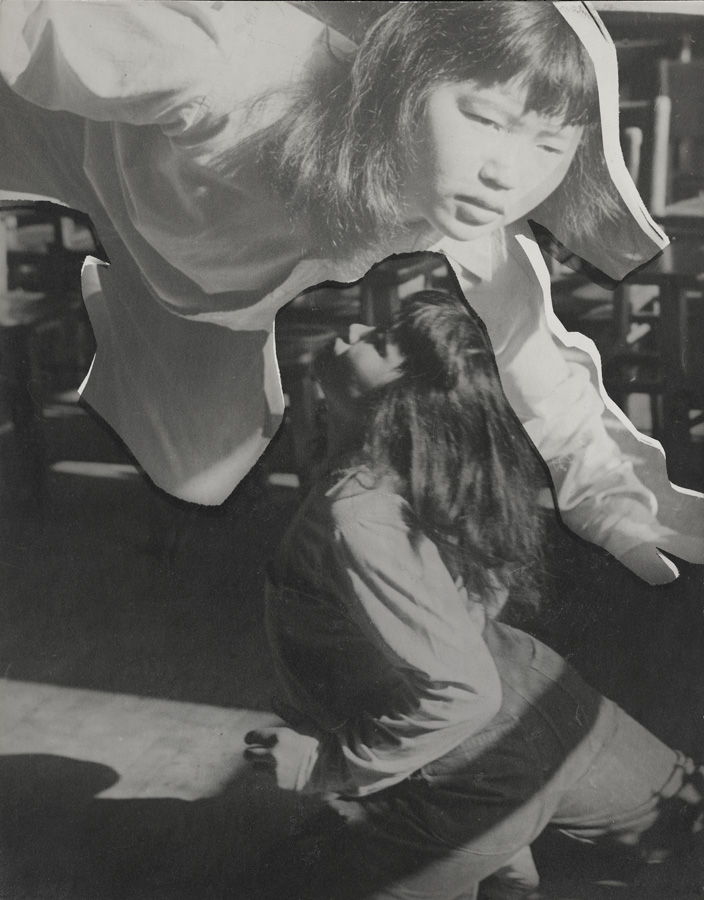
Fig. 1 Elizabeth Schmitt Jennerjahn, Collage portrait of Ruth Asawa at Black Mountain College, c. 1948–49. Photocollage. Private collection. Photo courtesy: Ruth Asawa Lanier, Inc., Courtesy David Zwirner
A photocollage (fig. 1) of dancing Ruth Asawa, dated to around 1948-1949, along a few other portraits from the same series made by the dancer and artist Elizabeth Schmitt Jennerjahn (fig. 2), constitute the only visual documentation bearing witness to Asawa’s foundational involvement with dance during her time at Black Mountain College, from 1946 to 1949. The photocollage depicts two dancing figures, both identifiable as Asawa, gliding across the composition along a diagonal line and gracefully avoiding collision. The scene is set in the college dining hall and may record one of the individual lessons led by Jennerjahn, Black Mountain’s second dance teacher. The form of the dancers’ bodies is deliberate and tense—the upper figure stretches her limbs out to stabilize, while the lower one bends backwards to draw a parabolic curve. By combining two portraits and fitting the two figures into the contours of each other, Jennerjahn draws our attention to the shape of space carved out by the dancer’s body. The work corresponds to a pivotal moment in Asawa’s artistic trajectory, when she began working in three dimensions.
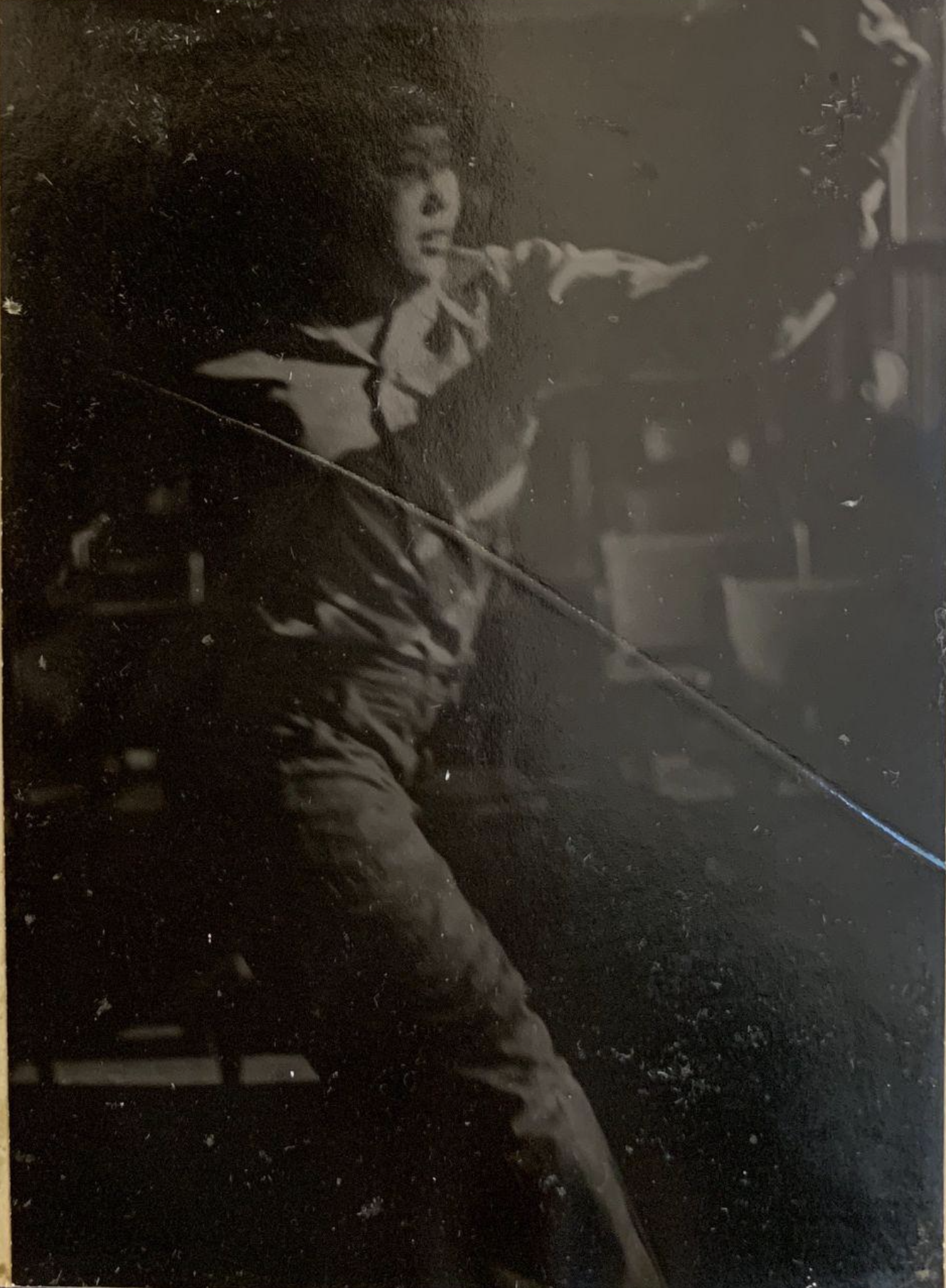
Fig. 2. Elizabeth Schmitt Jennerjahn, Ruth Asawa dancing, Black Mountain College, 1948. Private collection. Photo courtesy: Ruth Asawa Lanier Inc., Courtesy David Zwirner.
A year prior, in 1947, she learned how to loop wire into baskets in Toluca, Mexico, where wire basketry flourished in the mid-1940s. On her return to North Carolina, Asawa honed her looping skills and modified the technique to better suit her artistic needs. Those explorations led to her unique sculptural language of porous wire mesh forms suspended in space. Concurrently, Asawa also took Josef Albers’s Structural Sculpture course, which points to a path of theoretical study running parallel to an independent practical inquiry into spatial forms.[1] It cannot be overlooked that dance was a critical part of the artist’s routine in that seminal period. In fact, Asawa’s unique attunement to negative space fits resonates with considerations of self-referentiality and spatiality of movement in Modern Dance. In her last year at Black Mountain College, Asawa committed herself to a sustained dance practice under the mentorship of Merce Cunnigham and Elizabeth Schmitt Jennerjahn. In examining the intersection of Asawa’s sculptural project and the choreographic ideas current in American Modern Dance, this essay aims to untether discussions of negative space in Asawa’s work from strictly structural and visual terms, instead favoring the embodied experience of space.
Even though Asawa had been exposed to Modern Dance before coming to Black Mountain, it didn’t factor into her artistic process until the storied summer of 1948 when she took classes with Merce Cunningham.[2] In the preceding years, the college’s robust art curriculum didn’t offer dance. Asawa focused on visual arts training with Josef Albers and Ilya Bolotowsky (who took over Albers’s courses in Fall 1946 following the former’s sabbatical), interspersing these classes with other disciplines: music with Charlotte Schlesinger, philosophy and mathematics with Max Dehn, American Civilization with David Corkran, book binding with Johanna Jalowetz, and daily chores at the farm.[3] The summer session in 1948 was a catalyst for reintroducing dance to the college, which was last taught formally by Elsa Kahl in the early 1940s. With Cunningham, along came composer John Cage, Louise Lippold with other dancers from Cunningham’s circle, and Elizabeth Jennerjahn, who, having fervently studied dance in New York, returned to Black Mountain to establish a life in pedagogy for herself and her husband, Pete Jennerjahn. These two dancers—Cunningham and Elizabeth Jennerjahn—were the direct influences on Asawa with respect to this embodied and spatial art form. As both were trained by Martha Graham—a dancer and choreographer that became synonymous with Modern Dance and shaped generations of practitioners with her technique, her ideas likely also made their way onto the campus. As Cunningham and the company left for New York at the conclusion of the Summer Art Institute, Jennerjahn stayed on and began her teaching.
To understand what choreographic ideas Asawa could have interfaced with during the short summer session with Cunningham, it’s important to first situate this time in the arc of Cunningham’s career. Three years after leaving Martha Graham’s company and four years deep into his collaboration with John Cage, Cunningham was on the precipice of his most consequential inventions. The ground had already been laid: with Root of Unfocus, a solo he composed in 1945 and which he performed the summer of 1948 at Black Mountain, Cunningham began to conceive of his dances as defined by duration.[4] This allowed movement to be autonomous, simply synchronous with, rather than dependent on the accompanying musical score. In 1948, Barbara Frost, a critic for Dance Journal, noted that his work, “slow and intense,” substitutes subject matter with a “focal point”.[5] This early review reveals that his art broke away from the dominant paradigm of dance as expression, a mode championed by Martha Graham, who relentlessly explored the relationship between the psyche and the somatic experience of the body.
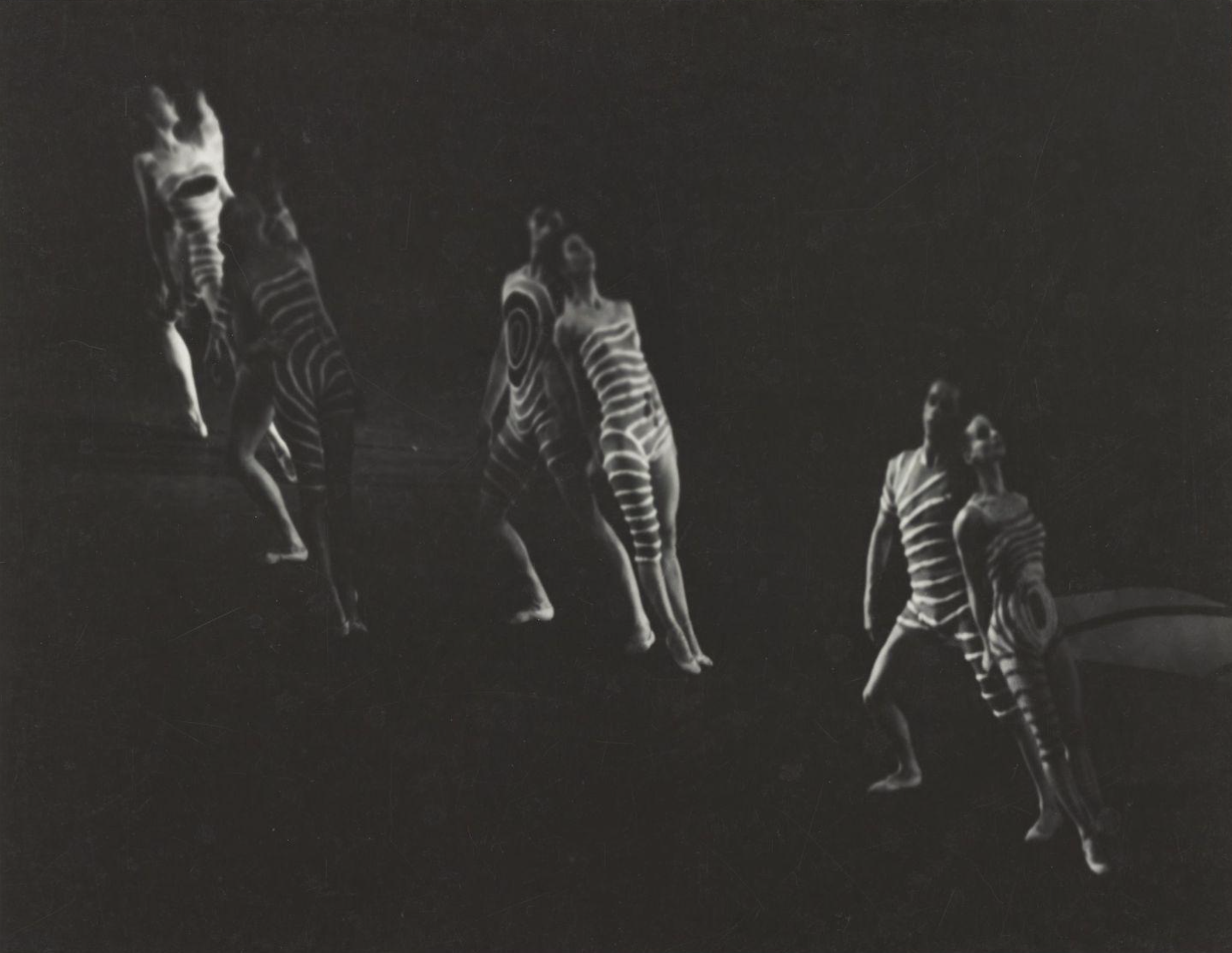
Fig. 3 The Seasons, with sets and costumes by Isamu Noguchi, choreographed by Merce Cunningham with music by John Cage, 1947. Photo: Larry Colwell. Source: Library of Congress
Cunningham’s first ballet, The Seasons, premiered only a year before he and Cage first taught at Black Mountain. There is no documentation of the performance, except for a few photographs of the performers clad in costumes designed by Isamu Noguchi (fig. 3). Scholar Juliet Bellow suggests that this work already showed signs of Cunningham’s radical emancipation of dance from music by treating all aspects of the spectacle as separate entities coming together to form a disintegrated, synchronous experience. In the ballet, dancers’ formations constantly shifted positions and arrangement, ranging from solos to groups that scattered across the stage in different directions.[6] The few extant photographs give us a sense of how visually dazzling The Seasons must have been. The concentric and meandering lines of Noguchi’s costumes literally materialize the performers’ movements as lines in space. In moments of stillness, as captured in the photographs, the patterns deepen the impression of the dancers fusing into one form. The act of dancing set the lines on their costumes in motion, which superimposed one spectacle of movement onto another. All movement was being transcribed into a diagram of itself in real time, effectively coming to the fore as the main event of the ballet.
The ideas of fully mappable movements of a body were a major axis of theoretical inquiry for modernist dance theorists and practitioners, like Rudolf Laban who developed a robust notation system and a choreographic language of ‘trace-forms’ based on delineation of movement.[7] Simultaneously, as dance scholar Mark Franko points out, these notions arose in parallel and in response to studies of factory workers’ efficiency pioneered by Frank and Lillian Gilbreth.[8] In the first decades of the 20th century, the Gilbreths employed a time-lapse photography process, which they termed chronocyclegraph, to visualize the changing positions of the body in time. The result was a notation of movement conjugated by idiosyncrasies of human anatomy—an organic, curvilinear geometry represented in ghostly, tangled traces of light captured in a snapshot (fig 4).
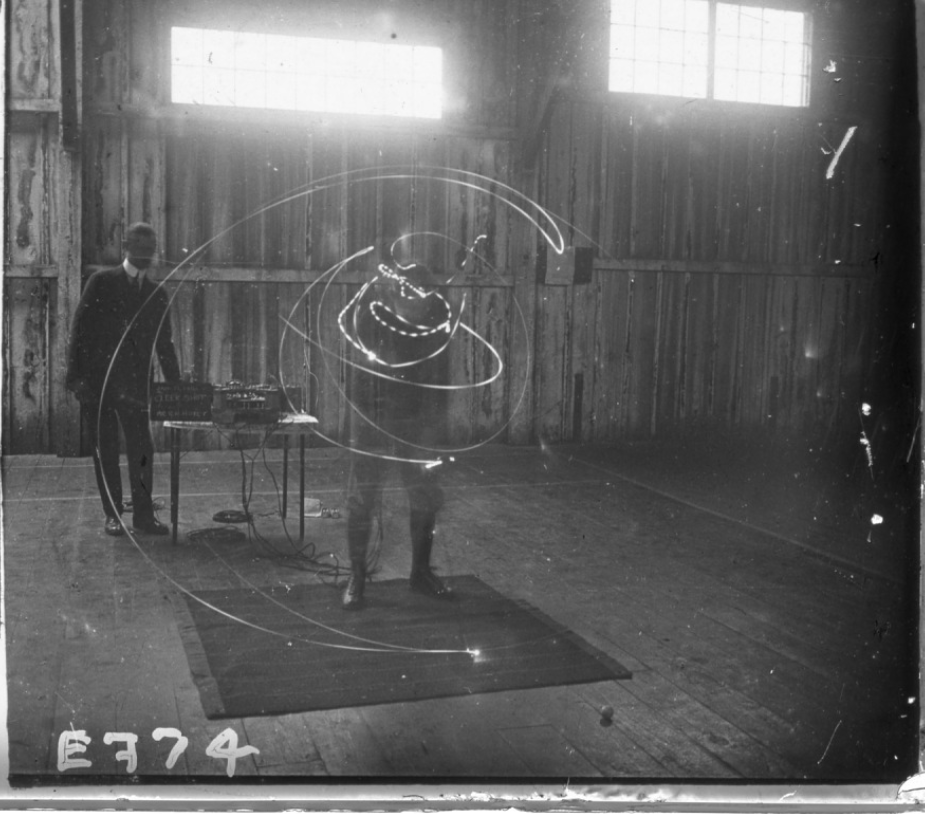
Fig. 4. A cyclegraph of a golf swing. Glass Stereo Slide. Frank and Lillian Gilbreth Collection. National Museum of American History
In dance, Franko argues, a similar ambition of visualization promised to elevate movement to “aesthetic absolute” via “physical self-delineation.”[9] At the Bauhaus, which served as one of the key influences on many BMC theater and dance projects, Oskar Schlemmer’s ballets and theater pieces sought to materialize the movement of the body through elaborate costumes and stage design. In Pole Dance, long wooden sticks attached onto the performer’s limbs meant to foreground the range of movements and emphasize articulation of joints.[10] Schlemmer’s idea of dance as a “geometry of calisthenics, eurythmics and gymnastics” unfolded within “cubical space” intersected by “network of planimetric and stereoscopic relationships.”[11] In Cunningham’s The Seasons, however, the materiality of the dancer’s movement is not drawn out through transformation of the dancer’s figure. Instead, the patterned costumes both manifest the paths and rhythms of the performers’ movements, and simultaneously camouflage the exact lines drawn by their limbs, resulting in a sort of independence or synchronicity of the visual component and movement. Through this gesture, Cunningham unsettled the notion of the choreographic material as a web of linear sequences in space with a sense of heterogeneity that would become a hallmark of his work, while also obliquely adhering to it. In The Seasons, the dancers emerge as both drawings and the centers of drawing compasses enmeshed in matrices of countless other paths.
In 1952, four years after the premiere of The Seasons and his first teaching appointment at Black Mountain, Cunningham wrote a short piece titled “Space, Time, and Dance,” where he laid out key concepts of his practice—rhythm, time, space, and gravity. In the opening paragraph, he bemoaned how American dance pioneers reduced space to “a series of lumps,” asserting that “in dancing … space and time cannot be disconnected.”[12] He reflected on the beginnings of his spatial philosophy: “I decided to open up the space to consider it equal, and any place, occupied or not, just as important as any other.”[13] In this egalitarian approach to space, the negative and the virtual become as important as the positive and the actual, an idea that also animates Asawa’s practice both in two and three dimensions.
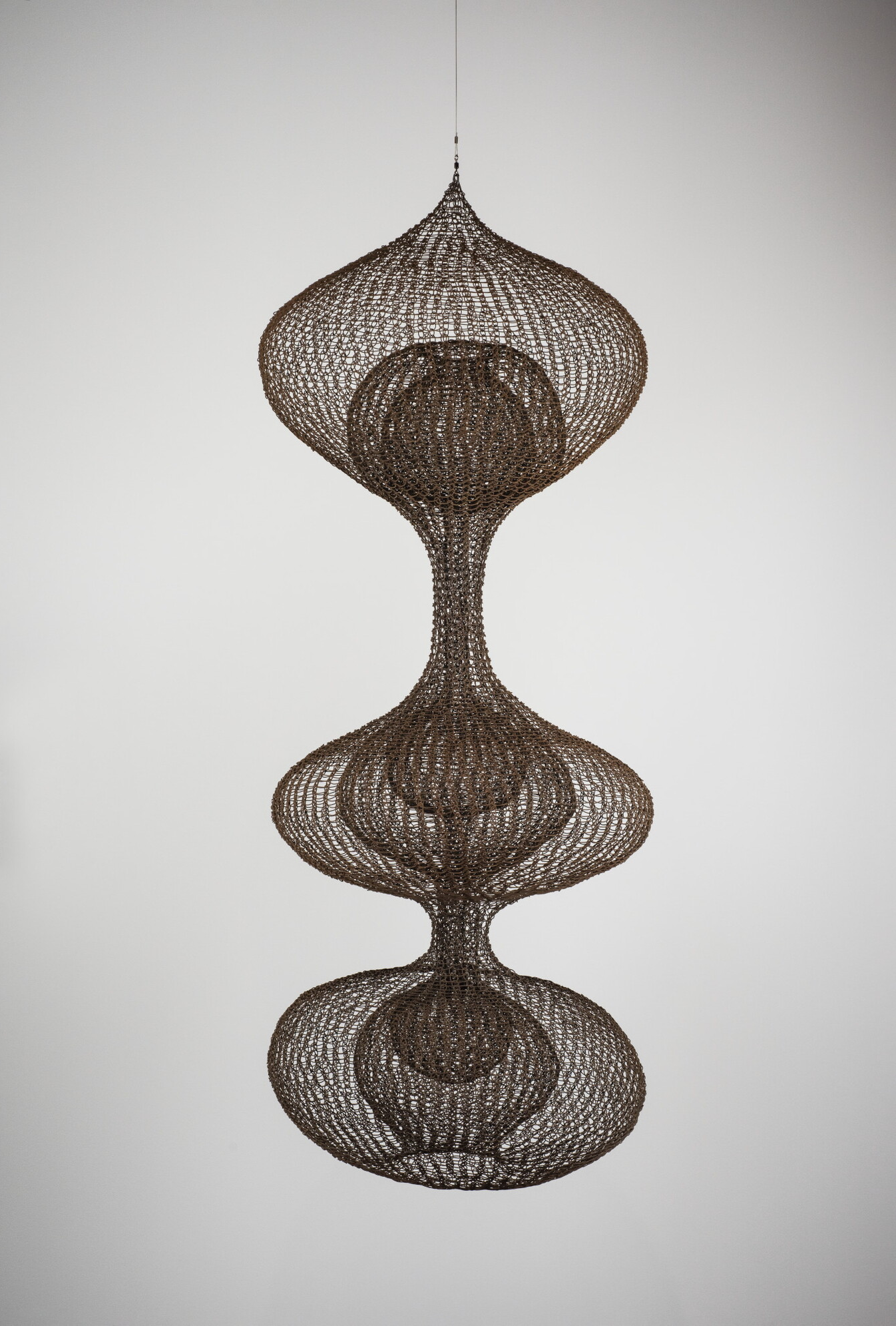
Fig. 5. Ruth Asawa. Untitled (S.453, Hanging Three-Lobed, Three-Layered Continuous Form within a Form). c. 1957–59. Iron wire. Amon Carter Museum of American Art, Fort Worth, Texas © 2026 Ruth Asawa Lanier, Inc., Courtesy David Zwirner
The overlapping network of virtual and actual paths in space hinted at in The Seasons seems most relatable to Asawa’s later sculptural work in looped-wire, which delineates a volume with a mesh of interlocking lines. Her looped-wire forms are built with a continuous wire strand that coils into loops at regular intervals, curves horizontally to form a circumference and then interlocks with the next row. The result is a permeable, porous surface that displays its hollow interior. Frequently, the surface folds inwards to create overlapping layers, but her work always resists complete isolation of the contoured space (fig. 5). The formal language of symmetry and curves corresponds to the arcs, circles and ellipses drawn by full rotation of human limbs acting as a double pendulum,[14] which we saw in the Gilbreths’ chronocyclograph images. In that sense, it’s easy to imagine an absent dancer tracing the outline of the sculpture’s silhouette from within it or perhaps around it, somewhat similar to how the two dancers shape the space of the photocollage in Jennerjahns’ double portrait of Asawa. The looped-wire sculptures were often compared to human figures, especially female, because of this biomorphic vocabulary, an interpretive path that often circumvents the granularity of Asawa’s modular and unwaveringly linear structures, as well as the central role of space. The spheres, elongated lobes, open cones, and other shapes of her complex compositions are built out of thousands of tightly arranged loops unfolding in an endless string.
This rhythmic repetition of a single sculptural phrase could be seen as a physical notation of Asawa’s repetitive, iterative handwork. Yet the way Asawa spoke about her sculpture points us to a different interpretation of the role of space and time in her work. She said of the relationship between the volume and the wire:
I am able to take a wire and go into the air and define the air without stealing it from anyone. A line can enclose and define space while letting the air remain air.[15]
This idea of defining rather than occupying space expands on the model of mutually affirming relationship between figure and ground that Asawa absorbed in Josef Albers’ classes.[16] In the case of her sculpture, this definition is unassuming, “evanescent” just like the act of dance.[17] As the works shift and spin when suspended, or bend and collapse when handled, the definition they put on space also changes. The air in and around it remains unchanged but it becomes subjectively enhanced via an encounter with a looped-wire sculpture—it’s now a palpable volume, held in focus with a web of interlocked loops. Insofar as they define a fragment of the spatial dimension, Asawa’s sculptures operate as a notation of space itself and a score for the mind to perceive that dimension more starkly. The curvilinear articulation of the mesh surface, evoking the bodily motion range, could also be read as a proposal of embodying the space at hand—a three-dimensional choreographic diagram latent in any negative space. In 1958, Asawa stated that the problems examined in her sculpture are “the ratio of minute weight to apparent volume, durable fragility, and implication of movement where there is none” (author’s italics).[18]
Tellingly, soon after leaving Black Mountain, Asawa enrolled at the San Francisco State University, where in 1953 she took two courses on dance, which included study of choreographic notation.[19] Both in Cunningham’s Seasons, and in Asawa’s later work, the act of drawing in space, be it with wire or with a moving body, sharpens the apprehension of void and positions it as an object of contemplation, a site where the virtual and actual pathways meet.
It’s unclear whether any of the ideas staged in Cunningham’s Seasons or Root of Unfocus were discussed in his course in 1948. If some of his thinking related to this composition trickled into that class, it might have happened organically. Cunningham held his Dance Technique classes every weekday from 10:30 to noon.[20] Not much is known about specific exercises he assigned to his students. Elizabeth Jennerjahn recalled that what stood out to her was “his whole sense of form, of architecture, of the discipline of not doing what comes naturally,”[21] while June Rice Christensen, who took Cunningham’s class between 1949 and 1950, stated that “Merce’s work implied that you do not lift your leg unless you can lift it all the way.”[22] In the intense training of specific movements, Cunningham saw a way toward “the mind, body and spirit function[ing] as one.”[23] As early as in 1948, a time during which Cunningham integrated elements of ballet technique into his method, this cultivation of awareness would have been likely felt in daily exercises of the same phrases and forms, allowing the students to perceive embodied aspects of the mind that simultaneously commands and experiences gestures along with environmental forces such as gravity. Glimpses of his emphasis on the dancer’s anchorage in place, space, and time can be seen in Clemens Kalischer’s summer 1948 photographs of the choreographer, Jennerjahn, and an unidentified student rehearsing in the dining hall (fig. 6). The elongated spines and tense torsos suggest that movement is mostly occurring in the limbs, with the straight spine acting as the axis, allowing heels to lift off the ground.

Fig. 6. Clemens Kalischer. Dance class with Merce Cunningham, Black Mountain College, 1948. Gelatin silver print. Collection of Black Mountain College Museum + Arts Center. Gift of the Artist. Copyright: The Clemens Kalischer Estate.
Remarking on Asawa’s progress in his class, Cunningham noted: “Excellent sense and discipline, concentration and the desire to know.”[24] From this short note, one can infer the thoughtfulness, deliberation and presentness which Asawa brought forth in her dancing. Jennerjahn described the kind of spatial and embodied awareness fostered in Cunningham’s class as “the challenge of being involved in an architectural discipline of a time, space.”[25] “By the end of the class you realized you had just created an organic movement construction,” she summed up the experience of working with Cunningham.[26]
What Asawa took out of Cunningham’s classes were probably not ballet-inflected poses and gestures, but his unfixed understanding of space as “equally interesting and equally changing,”[27] which she then put to the test in her looped-wire sculpture. Cunningham’s choreographies organized space and time through duration and rhythmic structure, which guided patterns of movement that punctured space, while Asawa chose to hold slivers of space with a configuration of fixed points of her wire mesh. Her sculptural containers and their porous networks were results of the origin of her method in wire basketry, where, like in other vessels, space operates as a pure potential, an expectation of the future bounty to fill it. The deep consideration of space in relation to the body is also noticeable in Asawa’s works on paper from her last year at Black Mountain College (1948–49), where a group of simplified figures soars to the top of the page, as if floating on the surface of a solid background (fig. 7). The space is undifferentiated—equal, to borrow Cunningham’s words —except for the pockets of ground encircled in between the outstretched arms of the figures, where the color changes from yellow to blue. Termed “Dancers,” these works oscillate between abstraction and representation of dancing bodies. The areas of blue in between the circles could be read as the bodily reach of each figure, the area to which a dancer is most keenly attuned—their kinesphere, in Labanian terms.

Fig. 7 Ruth Asawa. Untitled (BMC.52, Dancers), c. 1948–49. Oil on paper. Private collection © 2026 Ruth Asawa Lanier, Inc., Courtesy David Zwirner
When Cunningham left the College in the fall, Asawa continued to regularly practice dance, now with Elizabeth Jennerjahn. The correspondence from that year reveals that she remained deeply impacted by the cultivation of spatial and proprioceptive consciousness which also extended to Jennerjahn’s classes. As she wrote to her fiancé Albert Lanier in November 1948: “We dance daily; dance is joy, longing, crying, laughing, everything. […]The alert body (not tense), can sit quietly, and be active without movement, the power of a human mind to move the body is incredible.”[28] The acute awareness of one’s body and the surroundings feels indebted to Cunningham’s approach but in fact it was also a characteristic of Martha Graham’s teachings, who was a mentor to both Jennerjahn and Cunningham. In Jennerjahn’s photocollage, we see Asawa with one of her legs bent and resting on the ground. This position, alongside the list of emotional states from the cited letter, indicates a Grahamian lineage of Jennerjan’s pedagogy: both expression and horizontality were key aspects of Graham’s project. Cunningham, on the other hand, insisted on verticality because that orientation reflected the quotidian experience of movement. A strict teacher, Graham demanded a “complete physical awareness” from her dancers, which for her, started with breathwork.[29] Extrapolating from the psychosomatic effects and rhythms of respiration, Graham developed the essential vectors of her technique, which she founded on the principle of contraction and release. Both motions expanded the natural directionality of exhaling and inhaling, and articulated the tension primarily in the torso and pelvis, rounding or straightening the back, respectively. In June Rice Christansen’s recollections, the Graham technique formed a big part of daily morning sessions in Jennerjahn’s class.[30]
Related to this somatically-rooted duality was Graham’s core instruction of projecting the inner energy outwards, which harmonized with her ideas of dance as expression of inner states. Movement was a means of conveying an embodied experience of emotion divorced from the particularities of the subject, in which her approach varied greatly from Cunningham’s. Her technique, however, first and foremost focused on the somatic experience of executed movement and energies traversing through the dancing body as it evolved from a marriage between affect and discipline in search of a subjective form. Graham herself was said to instruct her trainees to “feel the inner skeleton of the body(…) the projection of going outward.”[31] In her technique, breath, contraction, and release drive the movement of the extremities. This directional understanding of mobility as “outwarding of inwardness” echoes in Asawa’s letters. In one from February 1949, Asawa charts the origin and expansion of movement from deep within. She writes: “excitement of dance is painful but wonderful. Unseen muscles beginning the movement, the energy from the center affects the movement of the hands.”[32] At the time of writing that letter, Asawa would be working out the centers of her looped-wire constructions, finding the most efficient method to start a series of concentric coils emanating from a single twisted loop.
This centrifugal vector would stay with Asawa for decades throughout the later stages of her practice, as she built her forms from the inside out, starting with the center and moving out, both in her sculpture, as well as in her drawings, which take natural growth patterns as their point of departure.[33] In her most consequential, long-standing body of sculptures which she named “continuous form within a form,” a sequence of spheres radiates from the innermost one, all made from the same continuous surface of wire mesh. The rhythmic progression of shapes results in a repeated movement of self-enclosure, similar to the pose assumed by Asawa’s dancers in her series of eponymous paintings. What’s unique to the Continuous Forms, however, is the interchangeability of the roles of interior and exterior between the spheres—the outer edge of one becomes the interior of the next lobe. In her own words, Asawa was excited that she could make “a shape that was inside and outside at the same time.”[34] In that fully transparent world of Asawa’s sculpture, where binary positions of within and out were interdependent and ever changing, Graham’s ideas of outwarding the interiority fall out of step, even if operationally, Asawa did follow the direction of working from inside out.
Yet there is a branch of Asawa’s work which corresponds very closely to the idea of movement generated from a single center point—it’s her tied-wire sculptures, which she began in 1962, so thirteen years after leaving Black Mountain College. Rather than coiling and looping wire, Asawa tied it into bundles, which she divided and split outwards until she ended up with single strands. This method of working was born after Asawa attempted drawing a dried desert plant she received as a souvenir from Death Valley. Unable to draw the intricate network of branches and twiglets, she turned to wire and rendered the form in strands of wire splayed into a tangled web. She then continued working in this way, producing a tremendous range of variations, moving from tree-like shapes to forms derived from geometric centers—stars, circles, or cubes. For all the variety in tied-wired forms, Asawa emphasized the importance of centers in all sculptures in this body of work. “Once you create the tied center, you have made a decision,” she said.[35] Indeed, many of the tied-wire works radiate out from a single point of convergence. In many hanging pieces, the spiky branches reach out in all directions, outlining a sphere (fig. 8). Although vegetal in their source of inspiration, these works resonate with choreographic diagrams insofar as they chart nearly all possible lines of motion originating from a single point in space. That motion does not necessarily need to be human, and perhaps that’s the most profound distinction between Asawa’s embodiments of potential movement and Modern Dance. Similarly, her use of rhythm is structural, based on the natural forms and abstracted patterns of growth, from tree rings to corals to cellular replication.[36]
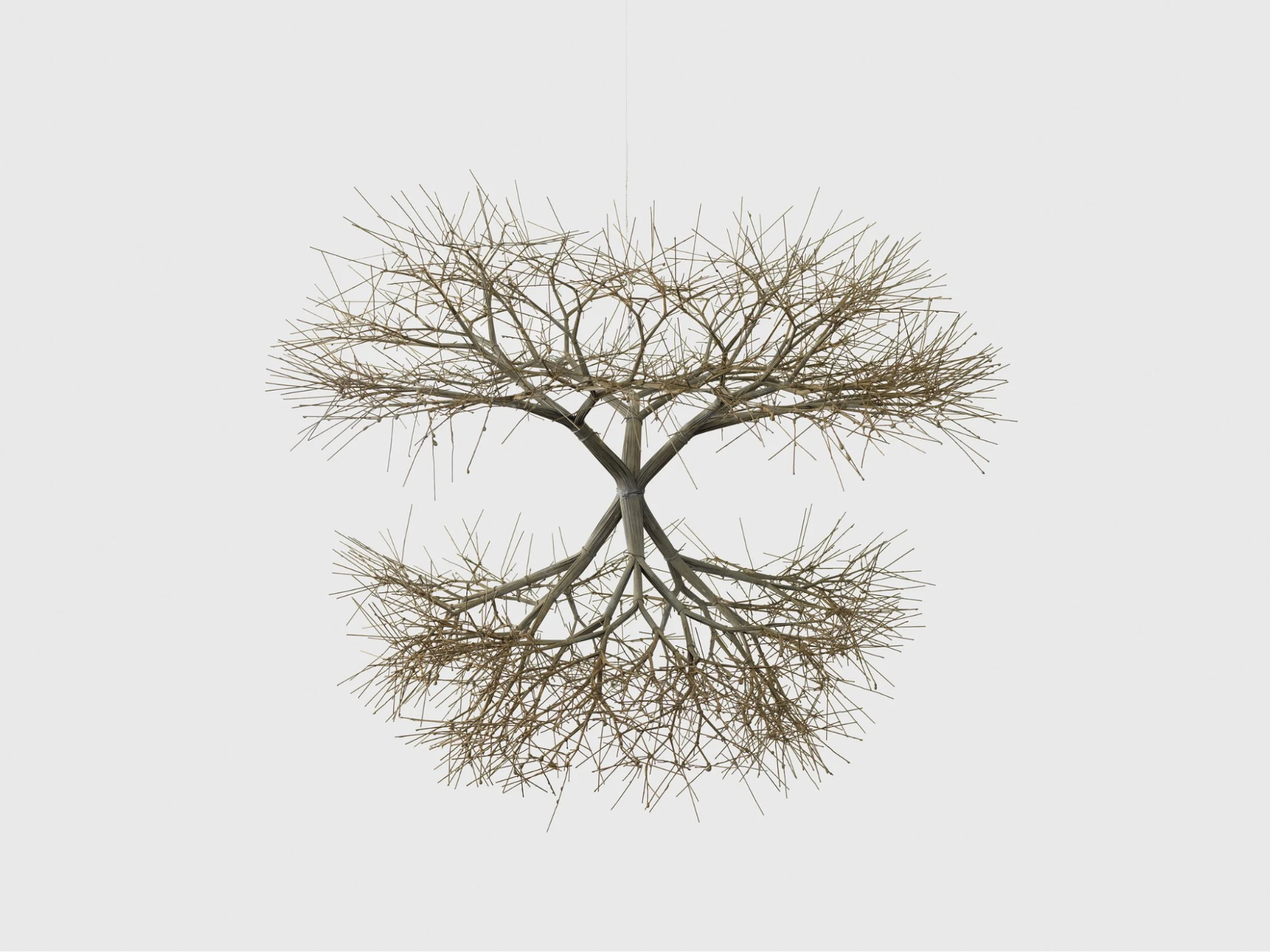
Fig. 8. Ruth Asawa. Untitled (S.052, Hanging Tied-Wire, Double-Sided, Center-Tied, Multi-Branched Form Based on Nature), 1965. Galvanized steel wire.Private collection. © 2026 Ruth Asawa Lanier, Inc., Courtesy David Zwirner
Though for the majority of her brief, but intense dance practice Asawa studied with Elizabeth Schmitt Jennerjahn, the contributions of the latter as a teacher and choreographer remain understudied. The friendship between the two artists, which dated back to Asawa’s time in Milwaukee, would allow for a free flow of ideas between them. As a teacher, in her own words, Jennerjahn was flexible:
Well, see, I was not a trained dancer, and I’d had these wonderful experiences. I think I did what I’ve done in all my teaching. I just started where I was and where the students were. I did the first thing [LAUGHS] that came to mind. I did utterly simple, simple and simple-minded things, and I had my own enthusiasm. … It’s been very basic and elementary. [37]
The attention to the individual needs and idiosyncrasies of one’s body was a distinctive quality of her teaching.[38] Elsewhere in the interview, she references multiple choreographers that shaped her journey with dance, which had started in Milwaukee (as was Asawa’s case) and developed in earnest in Elsa Kahl’s Eukinetics class at Black Mountain. Kahl’s course strove to cultivate “physical and mental attitude of the student by developing body control and poise as well as an elementary sense of dance movement” without reliance on any specific dance method.[39] Jennerjahn’s approach mirrored Kahl’s focus on the basics of human motion, but she also considered the milieu in which each dance unfolds; She described the content of her classes as “working on a development of time and space qualities…with an aim to create awareness of the material of dance.”[40] Positioned within the landscape of Modern Dance’s most consequential developments, Jennerjahn’s practice embraced space and duration as integral parts of the dance event.
In 1948, Jennerjahn was in the process of developing an interdisciplinary course together with her husband Warren “Pete” Jennerjahn. Called Light, Sound, Movement, the class was an exploration of structural relationships between these phenomena. In 1971, Elizabeth Jennerjahn described this experiment as follows:
My idea was to have projects that would have, I believe, a time limit of thirty seconds. […] by limiting it that way, you would have to get an integration of the three units without being blocked by any verbal ideas. I did not want a verbal continuity. I wanted a truly structural relationship of light, sound, and movement.[41]
One of the dances Elizabeth composed for the workshop activated various points —“spots”—of the stage and assigned different emotional tones to each, therefore it was nicknamed Spot Dance.[42] Its choreographic material is unknown but from the extant notes (fig. 9) we can surmise that the designated locations were connected through a simple walking sequence and each space was defined not by a physical border but by a set of movements aimed at portraying a particular mood. Light also played a key role in the task of defining a fraction of the space out of the vast open field. What lessons were there for Asawa, with her keen interest in continuity, space and interchangeable roles in a composition? Perhaps it was the idea of structural integration of disparate phenomena to create a holistic aesthetic experience. Or maybe it was the ability to create a space within a space without any permanent borders—a beam of light or a spool of wire might suffice to give it form.

Fig. 9. Notebook for Light, Sound, Movement Workshop, BMCPP, Box 11, Jennerjahn Folder 5. Western Regional Archives, North Carolina State Archives, Asheville, NC.
Though Asawa left the college in June 1949 and thus could not participate in the “Light, Sound, Movement” workshop, it’s possible that kernels of these holistic proto-performance experiments were already embedded in Jennerjahn’s classes. Arguably, the importance of shaping space from within the body had been implemented in her teaching, as Asawa’s letters suggest. Pete Jennerjahn summarized the concept for the class by saying “We tried to treat this much more as one would be scoring a trio, so that one is sort of aware of all three voices at the same time as much as possible.”[43] A similar polyfocal attention to the raw elements of the work—material, form, space and gravity, is asked from the viewers by Asawa, who interwove these qualities with a subtlety that let each component remain distinct, making each looped-wire work into a synchronous, portable visual quartet.
In 1948 and 1949, through her regular dance sessions, first with Merce Cunnigham, and then with Elizabeth Jennerjahn, Asawa took part in a revival of Modern Dance at Black Mountain College. Both teachers were at the experimental forefront of Modern Dance, bringing to Black Mountain novel ideas about movement conceived as autonomous spatial form as well as more established vocabulary of expressive modernism championed by Martha Graham. Asawa’s serious engagement with dance coincided with a pivotal breakthrough in her art practice, as she was fiercely experimenting with the recently learned technique of looped wire. As Asawa’s work extended to three dimensions simultaneously in sculpture and in dance, her spatial sensibility blossomed in a kind of a feedback loop between the embodied experiences of shaping space in time and the language of empty volumes stipulated by the porous basket-making technique. The emphasis on negative space, a decided unfixedness and the outward vector of Asawa’s compositions enact some of the principles of Cunningham’s and Graham’s choreographic philosophy, while actively fostering a sharper awareness of space within the beholder. Though Asawa never again practiced dance with the same intensity and consistency, a bodily-informed understanding of space can be detected in all aspects of her multifaceted work, as this paper aimed to show by tracing the dance ideas floating at Black Mountain College at the end of the 1940s in relation to Asawa’s own recollections and vis-a-vis different bodies of her work.
[1] Ruth Asawa’s notes from Structural Sculpture course, box 174, folder 6, Ruth Asawa Papers (M1585), Department of Special Collections and University Archives, Stanford Libraries, Stanford, CA. For an excellent analysis of Albers’s theory of structural sculpture, see Jeffrey Saletnik ‘Structural Sculpture: Ruth Asawa and Josef Albers’ in Ruth Asawa Retrospective, San Francisco Museum of Modern Art, Yale University Press, 2025, pp. 298-303
[2] According to her transcript from the Milwaukee State Teachers’ College, Asawa took a course in Modern Dance during her studies there. See box 173, folder 12, Ruth Asawa Papers.
[3] Asawa’s course report cards, Ruth Asawa student file, BMC General Records, Western Regional Archives, North Carolina State Archives
[4] A Program of Dances: Merce Cunningham with Sara Hamill and Louise Lippold, August 20, 1948, BMCRP, Series VI, Box 76, Folder 5, Western Regional Archives, State Archives of North Carolina; Fionn Meade ‘Root of an Unfocus’ in ed. Fionn Meade and Joan Rothfuss, Merce Cunningham: Common Time, Minneapolis, Minnesota : Walker Art Center, 2017. p. 34
[5] Barbara Frost, ‘Merce Cunningham’ in Merce Cunningham: Dancing in Space and Time: Essays 1944–1992. ed. Richard Kostelanetz, Chicago : Chicago Review Press 1992, p. 26
[6] Juliet Bellow, ‘A May–December Romance? Time and Collaboration in The Seasons’ in Merce Cunningham: Common Time, p.56-58
[7] Laban’s first articulation of his dance notation system was published in 1928. He continued to perfect it in subsequent writing and published an exhaustive text book in 1954. Laban, Rudolf von. Schriftanz: Methodik, Orthographie, Erlaeuterungen,. Vienna: Universal Edition,1928; Laban, Rudolf. Principles of Dance and Movement Notation, Macdonald & Evans London.1954; For more on ‘trace-forms’, see Laban, Rudolf von. Choreutics. Ed. Lisa Ullmann, Macdonald & Evans London, 1966.
[8] Franko, Mark, Dancing Modernism/Performing Politics, Bloomington: Indiana University Press, 1995, p. XI; Rudolf von Laban also conducted an extensive study of workers’ movements in factories. Laban, R., & Lawrence, F. C.. Effort: Economy in Human Movement. London: Macdonald & Evan, 1947
[9]Franko, Dancing Modernism/Performing Politics, p. xi
[10] Dirk Scheper. Oskar Schlemmer: Das Triadische Ballett und die Bauhausbühne, Akademie der Künste, 1988, pp. 195-196
[11] Oskar Schlemmer, ‘Man and Art Figure’ in ed. Walter Gropius,The Theater of the Bauhaus, Middletown, Conn., Wesleyan University Press, 1961
[12] Merce Cunningham, ‘Space, Time, and Dance’, in Merce Cunningham: Common Time, p. 341
[13] Cunningham, Merce, and Jacqueline Lesschaeve. The Dancer and the Dance: Merce Cunningham in Conversation with Jacqueline Lesschaeve. Marion Boyars, 1985., 1985, p. 18
[14] Incidentally, pendulum was one of the movements explored in Elizabeth and Pete Jennerjahn’s Workshop Light, Sound, Movement. See BMCPP, Box 11, Jennerjahn folder 5, Western Regional Archives
[15] Asawa, quoted in Daniell Cornell ‘The art of space: Ruth Asawa’s sculptural installations’ in ed. Cornell, The Sculpture of Ruth Asawa: Contours in the Air, University of California Press, 2006, p. 143
[16] Mary Emma Harris, ‘Black Mountain College’ in ed. Cornell, The Sculpture of Ruth Asawa, pp. 42-66; Ruth Asawa’s notes from Josef Albers’s summer 1946 design course, box 175, folder 4
[17] “[Dance] it’s not so much intangible but evanescent.” Merce Cunningham, and Jacqueline Lesschaeve. The Dancer and the Dance, p. 27
[18] Ruth Asawa, statement in the Guggenheim Fellowship application, 1958. box 129, folder 5, Ruth Asawa Papers
[19] Ruth Aiko Asawa Lanier’s student transcript, San Francisco State College, and dance notation notes, box 175, folder 12, Ruth Asawa Papers
[20] Permanent Schedule Summer 1948, BMC General Records, Publicity, Announcement, Notices, Internal Notices 1948-1949, Western Regional Archives
[21] Elizabeth Schmitt Jennerjahn, Interview by Mary Emma Harris, September 12, 2000. The Mary Emma Harris and Black Mountain College Project, Inc. Oral History collection (AC.564), Appalachian State University, Special Collections Research Center University Libraries
[22] June Rice/Lane Christensen, ’Dance at Black Mountain’ in ed. Mervin Lane, Black Mountain College: Sprouted Seeds: an anthology of personal accounts, Knoxville : University of Tennessee Press, 1990, p. 270
[23] Merce Cunningham, ‘The Function of a Technique for Dance,’ as published in ed. David Vaughan, Merce Cunningham: Fifty Years. Aperture, 1997, p.60
[24] Asawa’s course report card for Merce Cunningham’s dance class, 1948, Asawa’s student files, BMC General Records,Western Regional Archives .
[25] Jennerjahn, Interview by Mary Emma Harris, 2000.
[26] Jennerjahn, cited in Rhythm McCarthy’s presentation “Dance at Black Mountain College, 1941-1952: Elsa Kahl, Elizabeth Jennerjahn, and Katherine Litz.” given at “Black Mountain College and Merce Cunningham in the fifties: New perspectives” symposium, Russell Sage College, Troy, New York, from October 9-10, 1993. Jerome Robbins Dance Division, The New York Public Library. “Black Mountain College and Merce Cunningham in the fifties: New perspectives” cassette 8, transcription by the author, might contain errors.
[27] Cunningham, Lesschaeve, The Dancer and the Dance, p. 18
[28] Asawa, Letter to Albert Lanier, November 30, 1948, Ruth Asawa Lanier, Inc. estate archives.
[29] Lois Horst cited in Franko, Dancing Modernism/Performing Politics, p.42
[30] June (Rice/Lane) Christensen, ’Dance at Black Mountain’ p. 269
[31] Dee Reynolds, ‘A Technique for Power: Reconfiguring Economies of Energy in Martha Graham’s Early Work’, Dance Research: The Journal of the Society for Dance Research, Summer, 2002, Vol. 20, No. 1 (Summer, 2002) p.15
[32] Asawa, letter to Albert Lanier, February 8, 1949, Ruth Asawa Lanier Inc. estate archives
[33] Remarking on her tree ring drawings, Asawa said: “I enjoyed the repetition or developing from the center out. It’s the same principle of the negative positive shapes that move me into working in the wire. I always begin from the inside.” Asawa in Of Forms and Growth, dir. Robert Snyder, 1978
[34] Asawa, cited in Karin Higa.
[35] Jennerjahn, Interview by Mary Emma Harris, 2000.
[36] “Many of the forms are inspired by plant growth, bone structures and patterns seen in water, oil, soap bubbles and smoke,” Ruth Asawa’s statement in the Guggenheim Fellowship application, 1958. box 129, folder 5, Ruth Asawa Papers. Later on, the artist re-affirmed her commitment to this source of inspiration after developing her tied-wire technique: “Nature is my teacher. I have used materials that are products of our 20th century to study her growth patterns,” Ruth Asawa’s letter to Robert R. Midkiff, January 4, 1968, box 103, folder 3, Ruth Asawa Papers.
[37]Jennerjahn, Interview by Mary Emma Harris, 2000.
[38] We can glean that from Jennerjahn’s recollection of tutoring Robert Rauschenberg: “I know I spent a lot of time teaching Rauschenberg – a lot of time on one-to-one basis because he was so stiff. A lot of time on the floor, you know. I never saw such tight bound shoulders.” Jennerjahn, Interview with MEH, 2000.
[39] Black Mountain College 1943 Catalogue, Curriculum. Asheville Art Museum, Black Mountain College Collection, gift of Barbara Beate Dreier and Theodore Dreier, Jr. on behalf of all generations of Dreier family
[40] Jennerjahn cited in Rhythm McCarthy’s presentation “Dance at Black Mountain College, 1941-1952”
[41] Elizabeth Jennerjahn, in Elizabeth Jennerjahn, Pete Jennerjahn interviewed by Mary Emma Harris, 1972, BMC Research project, Western Regional Archives.
[42] Mark Hedden, Interview by Martin Duberman, 1967, Western Regional Archives.
[43] Pete Jennerjahn in Elizabeth Jennerjahn, Pete Jennerjahn interviewed by Mary Emma Harris, 1972, BMCRP.
Dominika Tylcz is a curator and writer. They serve as a Curatorial Associate in the Department of Painting and Sculpture at The Museum of Modern Art, where they recently contributed to Ruth Asawa: A Retrospective (2025). They hold a Bachelor’s degree in History of Art from the University of Oxford, and a Master’s in Curatorial Studies from the Center for Curatorial Studies at Bard College.
Cite this article
Tylcz, Dominika. “Embodying Space: Ruth Asawa and Modern Dance.” Journal of Black Mountain College Studies 17 (2026). https://www.blackmountaincollege.org/journal/volume-17/tylcz/.