

Black Mountain College Museum + Arts Center (BMCM+AC), in Asheville, NC, presents an inaugural exhibition celebrating the completion of a three-year, two-phase renovation and expansion project led by artist and designer Randy Shull and J. Richard Gruber, PhD, director of the newly launched Architecture + Design Institute. Organized by Gruber, Randy Shull/Wide Open: Architecture and Design at Black Mountain College Museum + Arts Center examines the enduring legacy of Black Mountain College (BMC, 1933‒57) through the lens of its architecture and design program and the influential innovators who taught there while contextualizing Shull’s design and construction process directly inspired by them. The exhibition is on view July 1‒September 3, 2016, and is accompanied by a publication.
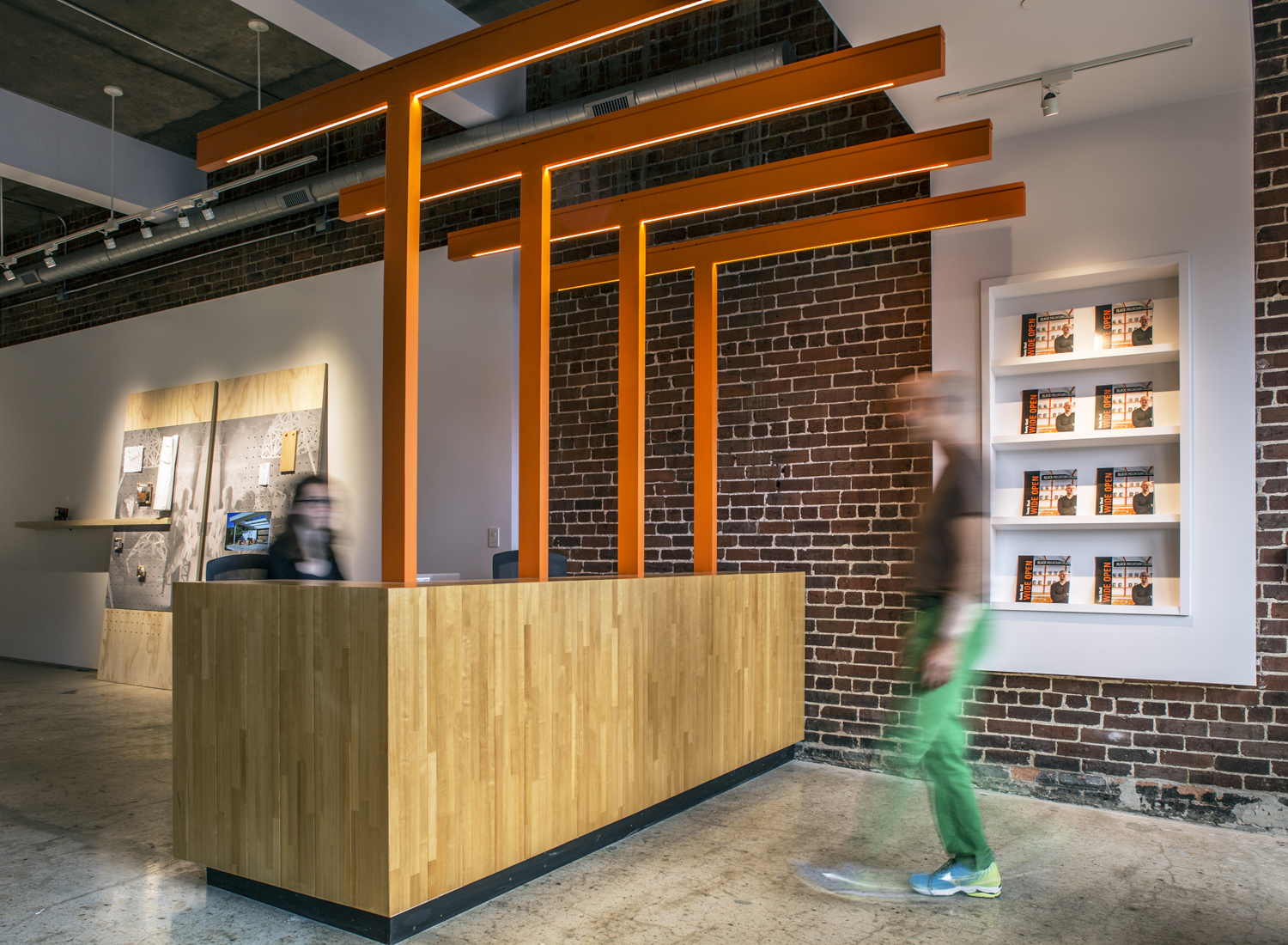
Phase One of the BMCM+AC expansion project (2014‒15) was the renovation of the Museum’s original site including the addition of an orientation and retail space, gallery, modular furniture and display systems, and library and study center dedicated to BMC. It re-opened to the public on January 30, 2015, and presents exhibitions, displays of material from the Museum’s collection, public programs, and special events.
Phase Two (2015‒16), opening on July 1, 2016, across the street in a recently converted historic property, is a totally new, flexible 2,400-square-foot space for exhibitions, performances, and public programs. Doubling BMCM+AC’s exhibition space, it also includes offices and an adjoining art storage center for the Museum’s growing collection of artwork and materials by BMC faculty and alumni. Both projects were made possible through the generous support of the Windgate Charitable Foundation.
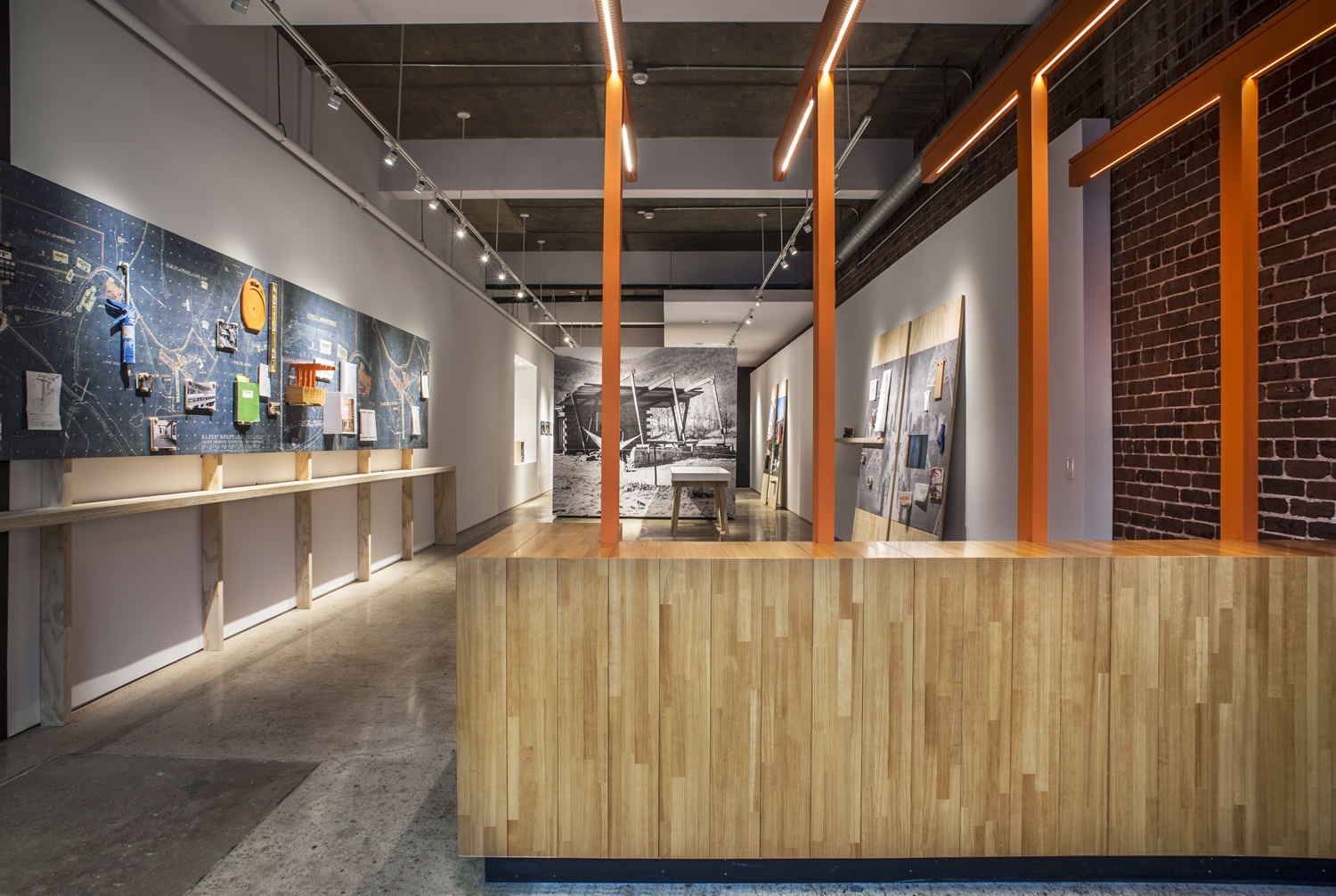
Reflecting the expanding educational and artistic mission of BMCM+AC, Randy Shull/Wide Open documents the evolution of the planning, design, and construction of the two facilities and Shull’s creation of complementary custom-made furniture, counters, desks, cabinets, and display systems. Shull’s designs and process were intentionally influenced by the architecture and design traditions closely associated with BMC, including the Bauhaus and modernist design principles. In addition to exhibitions, the moveable display system and gallery walls allow for configurations to accommodate functional variations and future growth. The exhibition features an array of Shull’s innovative designs—some of which are permanently integrated into the new space—including graphic panels, hand-built furniture, and a customized pegboard display system printed with archival photography. Wooden elements are made with modestly priced, locally sourced, and readily available materials like plywood, demonstrating creative problem-solving and an economy of resources that were central to BMC’s ethos. Working in close collaboration with Gruber and Shull, Asheville-based Susan Rhew Design developed the striking graphic identity for the Museum, exhibition, and accompanying publication.
In the reception area, visitors encounter a laminated plywood canopy inspired by a feature of the BMC’s pottery shed—painted the same orange-red color incorporated in BMC’s logo. It references a similar design element in the original space (Phase One) and serves as a cue that they are related. Large graphic panels feature black-and-white photographs taken by Hazel Larsen Archer of Buckminster Fuller with his early geodesic dome experiments and dancer/choreographer Merce Cunningham at BMC as well as a blueprint map of the campus. A large-scale photograph of the pottery shed incorporates a ceramic piece by Karen Karnes, who taught at BMC, to connect visitors to objects in BMCM+AC’s collection on view across the street. Shull’s process was informed by his research into BMC’s history and further enriched by his experience designing a house on the College campus in 2008. Chief among Shull’s inspirations was the artist Josef Albers who led BMC’s faculty from its establishment through 1949. Albers, who had taught at the Bauhaus under Walter Gropius, famously said that a teacher’s essential job was “to open eyes.” Shull considered principles and values that defined BMC as embodied in bold experiments like those conducted there by Albers’ wife, artist Anni Albers, Fuller, Cunningham, architect A. Lawrence Kocher, and others, and the College’s mission to provide a liberal arts education while emphasizing the arts, creativity, and learning by doing.
Shull’s explorations of BMC-inspired designs, materials, and mediums led to his creation of sculpted furniture and a painting that draws on Albers’ color theory. Also on view are photographs and descriptions of other Shull-designed buildings both built and unbuilt, furniture and lamp prototypes that incorporate BMC imagery, a scale model of the new space, drawings and sketches,and new experiments inspired by his work on BMCM+AC’s expanded facility. Dr. Gruber said, “The new gallery space Randy created is eloquently synced with the original site across the street, the educational and artistic mission of BMCM+AC, and the spirit of innovation and experimentation that was a BMC hallmark. Like the Bauhaus masters who taught at BMC, he has blurred the lines between art, architecture, design, and traditional notions of craft. It is a smart, flexible space that enables a range of programming and possibilities. As the curator of the exhibition, director of Architecture + Design Institute, and as coordinator of these two building projects, it has been an extraordinary collaboration with Randy and, in many ways, with Anni and Josef Albers, Marcel Breuer, Buckminster Fuller, Walter Gropius, and A. Lawrence Kocher. Thanks to Randy’s highly creative process, our visitors will better understand BMC and its far-reaching legacy and ongoing impact. We are very grateful for the support of the Windgate Charitable Foundation as we look to preserving and building on BMC’s exceptional legacy.”

