
ART NEXUS
Black Mountain College Museum + Arts Center
January 30 – May 9, 2026

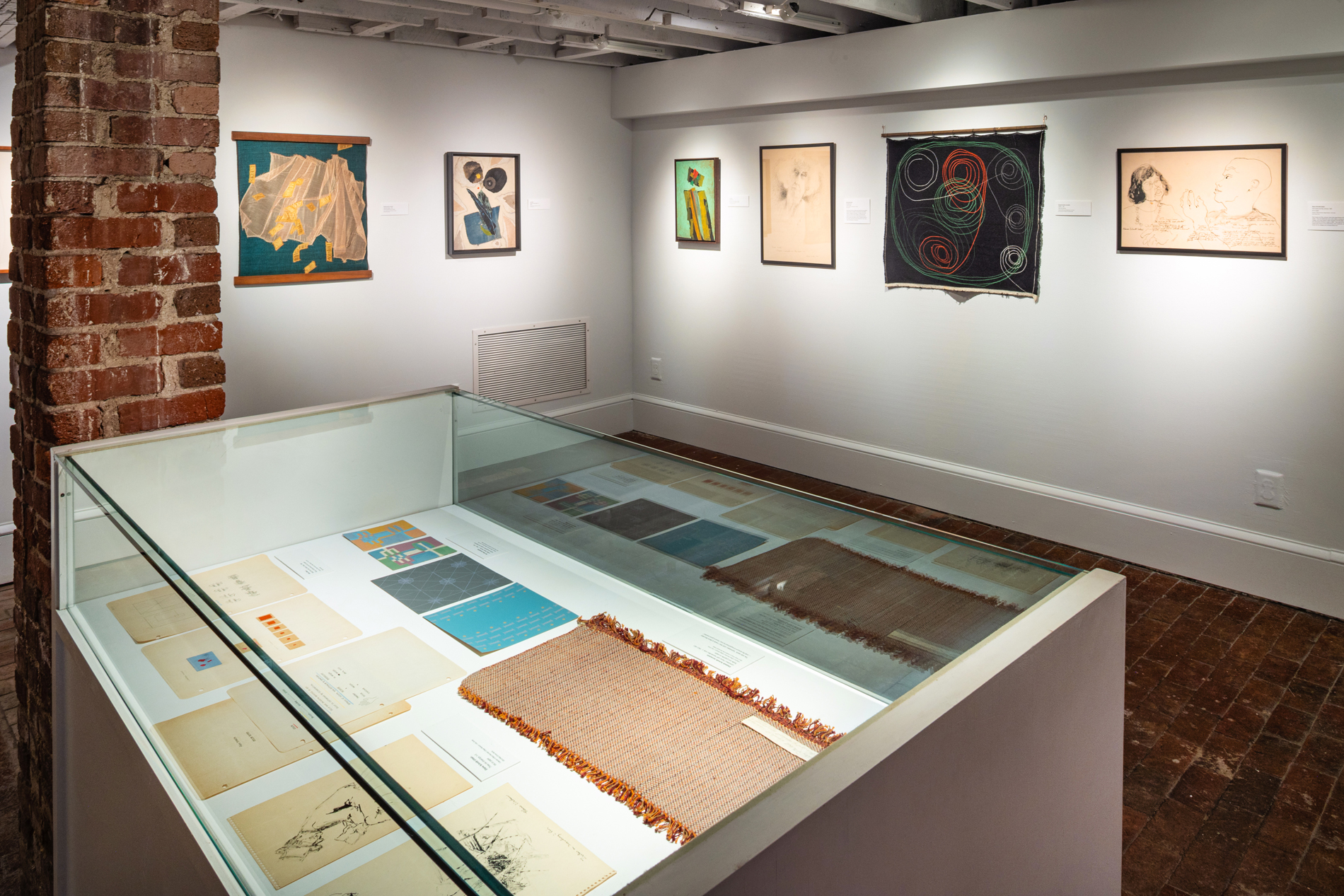
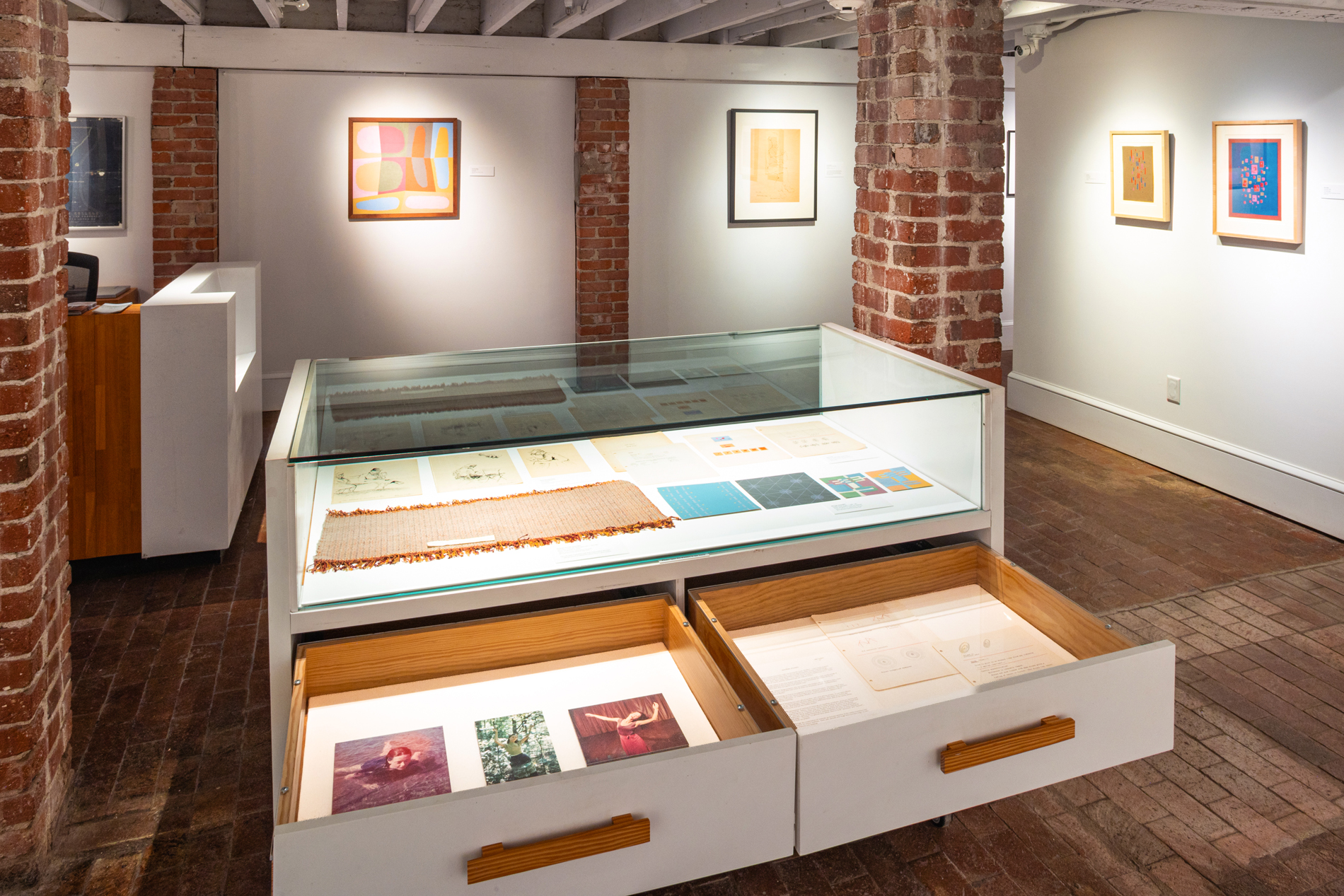
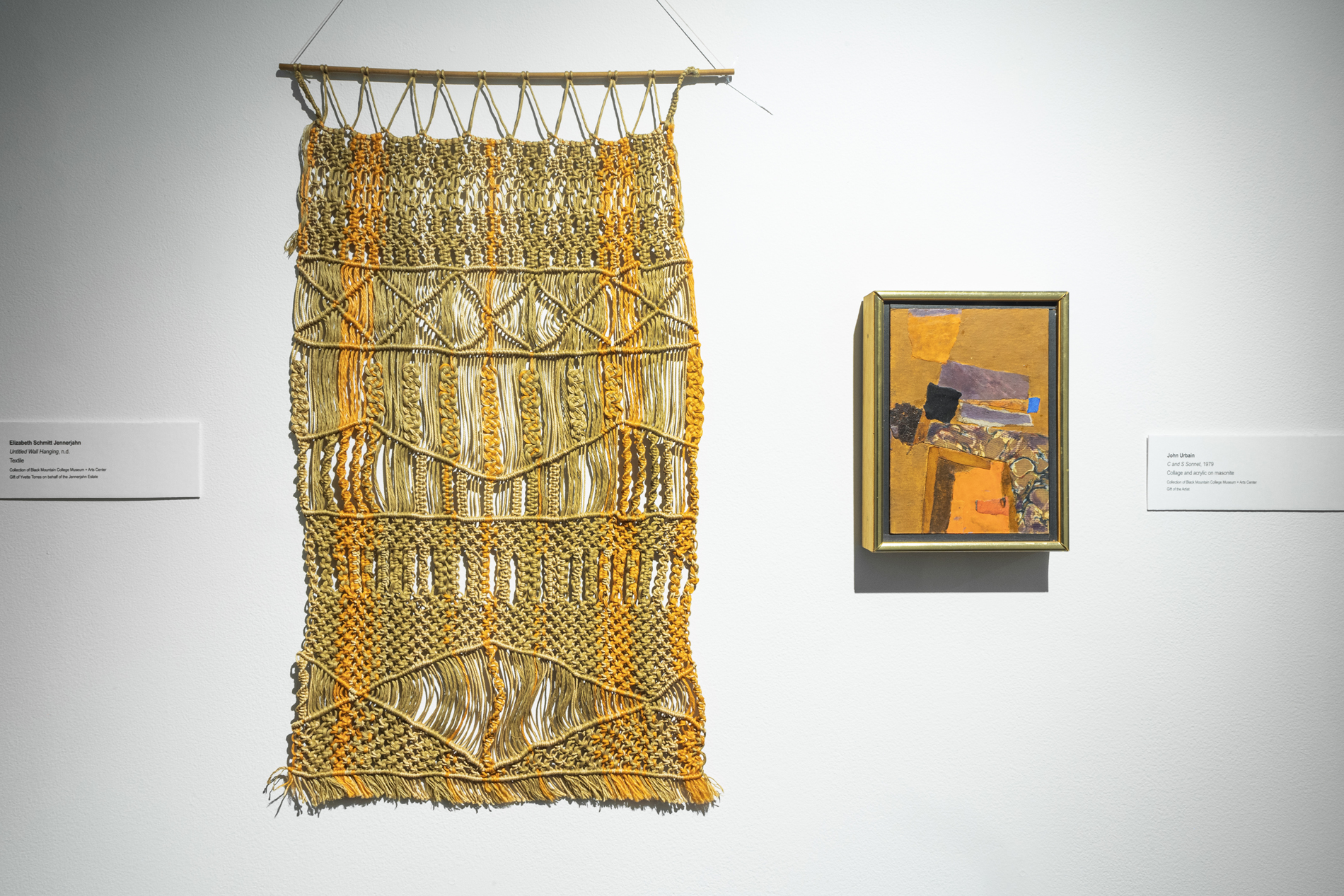
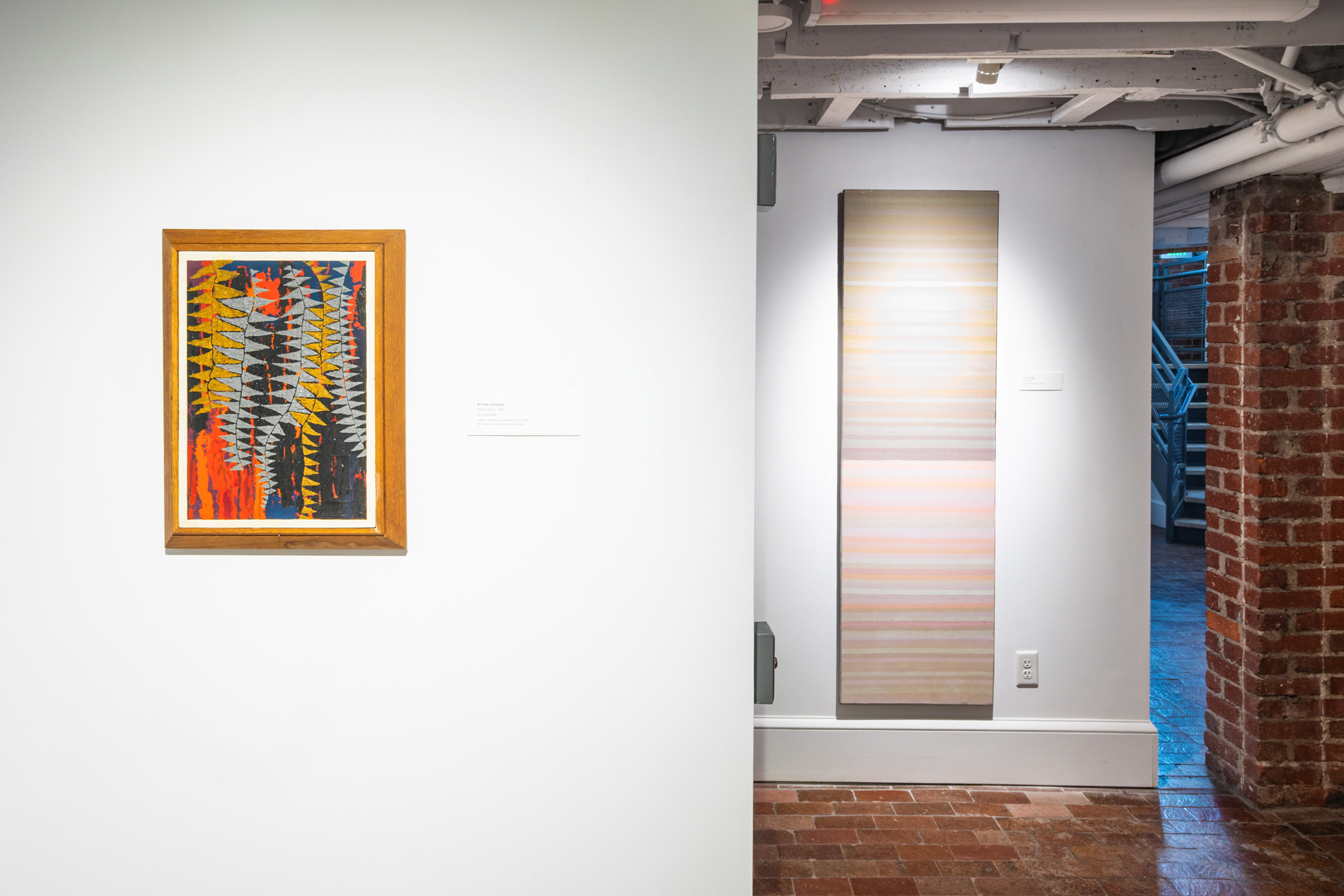
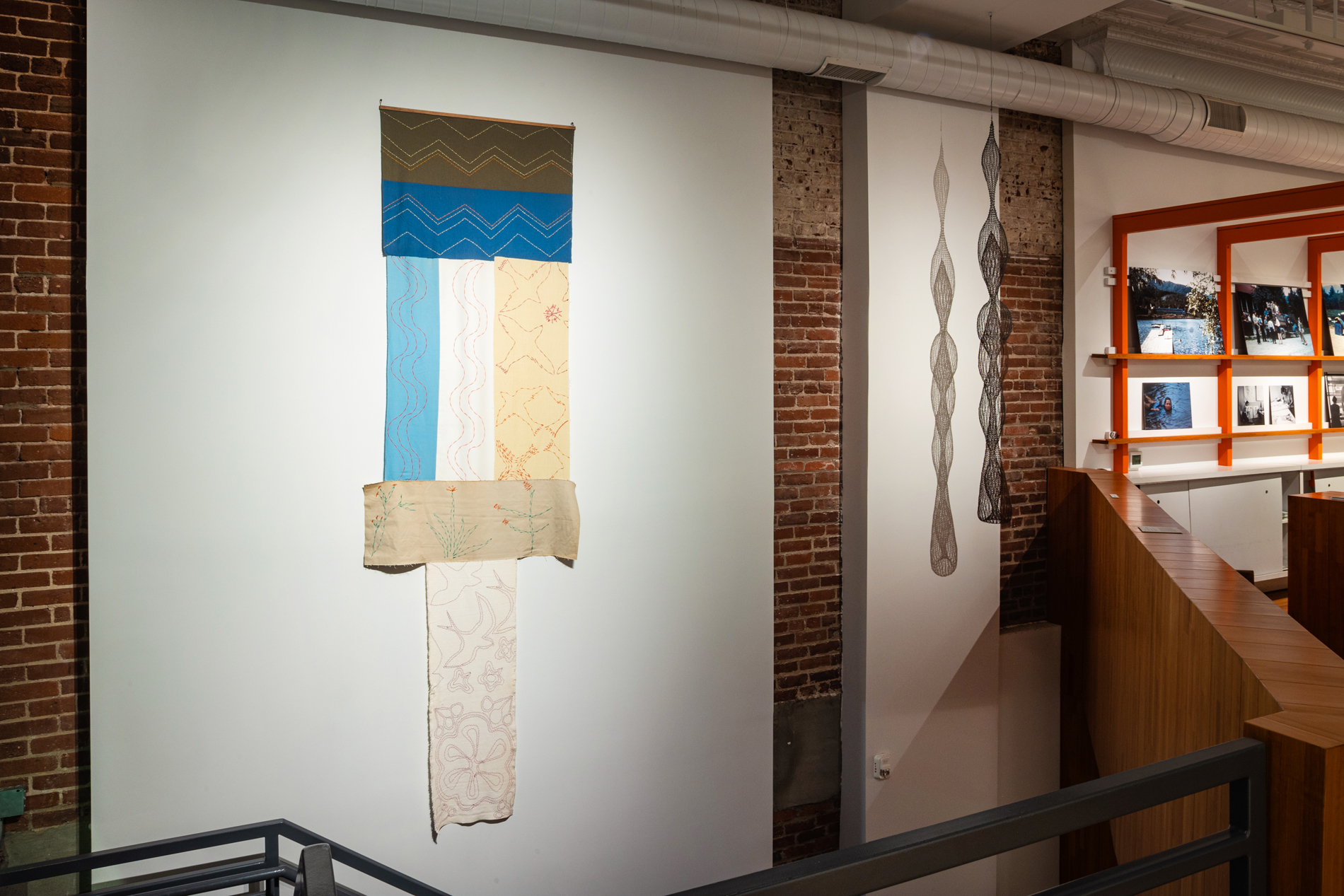
W.P. “Pete” Jennerjahn, Contrary Shadows, 1952. Oil on masonite. Collection of Black Mountain College Museum + Arts Center. Gift of the Artist. | Elizabeth (Betty) Schmitt Jennerjahn, Untitled wall hanging, n.d. Mixed textiles. Gift of Yvette Torres on behalf of the Jennerjahn Estate. | John Urbain, C and S Sonnet, 1979. Collage and acrylic on masonite. Collection of Black Mountain College Museum + Arts Center. Gift of the Artist. | Elaine Schmitt Urbain, Lake Eden, 1995. Ink on paper. Collection of Black Mountain College Museum + Arts Center. Gift of Elaine Schmitt Urbain.
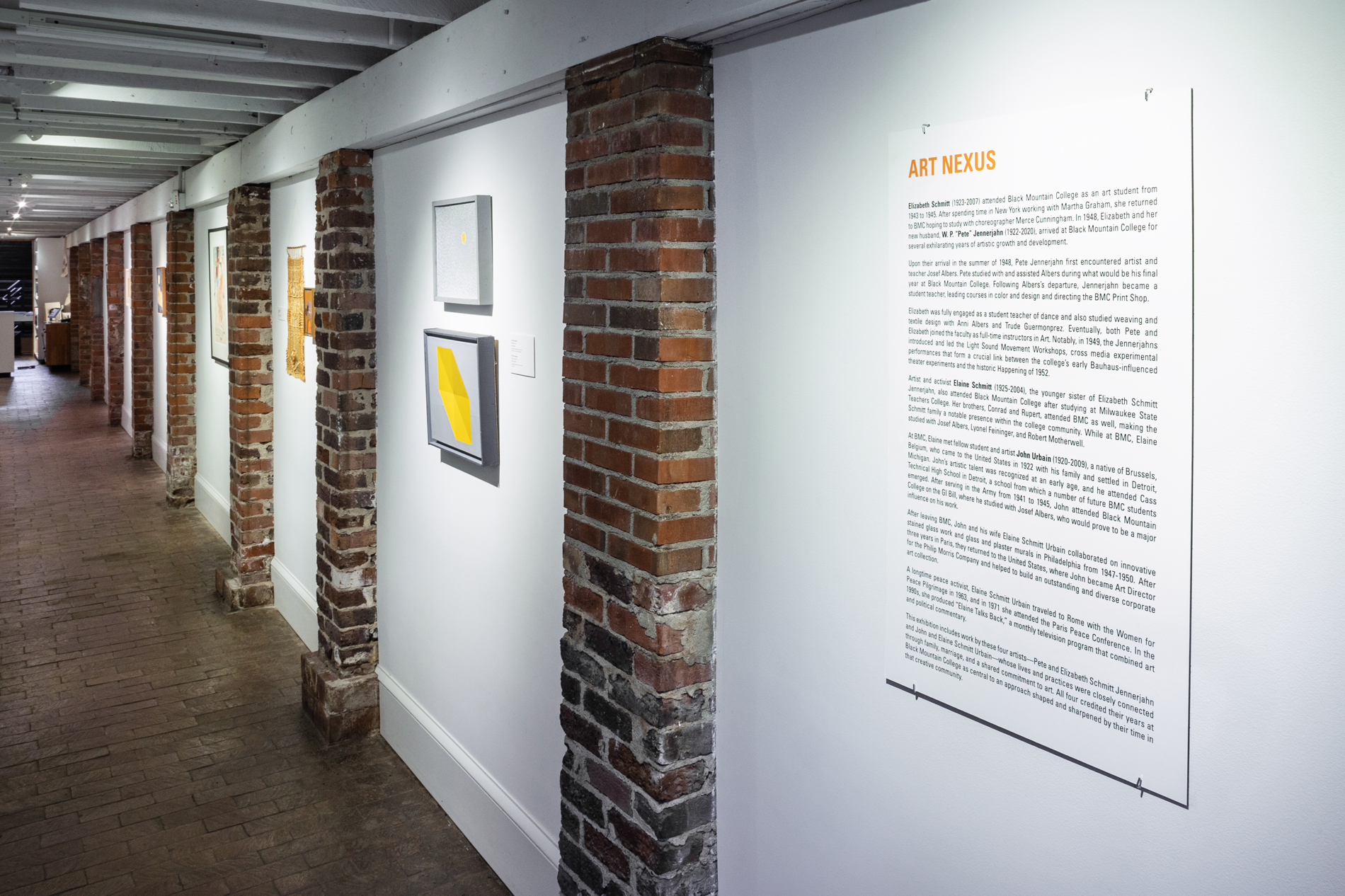
W.P. Pete Jennerjahn (1922-2020) arrived at Black Mountain College in 1948 through the persuasion of his wife, Elizabeth Schmitt Jennerjahn (1923-2007), who had previously attended the college for two years as an art student from 1943-1945. Elizabeth wanted to return to BMC to study with dancer/choreographer Merce Cunningham after some time learning from Martha Graham in New York. Upon the couple’s arrival at BMC in the summer of 1948, Pete Jennerjahn first encountered artist and teacher Josef Albers, and Pete studied with and assisted in classes during what would be Albers’s last year at Black Mountain College. Upon Josef Albers’s departure from BMC, Jennerjahn became a student-teacher of courses in color and design as well as leading the BMC Print Shop. Elizabeth was fully engaged as a student-teacher of dance, and also took weaving and textile design from Anni Albers and Trude Guermonprez. Eventually both Pete and Elizabeth joined as full faculty members in Art. Notably, in 1949 the Jennerjahns introduced and led the Light Sound Movement Workshops, cross media experimental performances, which are seen as an important link between the college’s early Bauhaus-influenced theater experiments and the historic Happening of 1952. After leaving BMC in 1951, Elizabeth and Pete lived briefly in Paris before settling in New York City and eventually Sedona, AZ and Jay, NY, where they continued to work as artists and teachers.
Artist and activist Elaine Schmitt (1925-2004) came to BMC after studying at Milwaukee State Teachers College. Her sister Elizabeth Schmitt Jennerjahn also attended BMC as did two brothers, Conrad and Rupert. While at Black Mountain College, Elaine studied with Josef Albers, Lyonel Feininger, and Robert Motherwell. She met and later married fellow Black Mountain student and artist John Urbain (1920–2009) a native of Brussels, Belgium, who came to the United States in 1922 with his family and settled in Detroit, Michigan. John’s artistic talent was recognized at an early age, and he attended Cass Technical High School in Detroit, a school from which a number of future BMC students emerged. After serving in the Army from 1941 to 1945, John attended Black Mountain College on the G.I. Bill where he studied with Josef Albers, who would prove to be a major influence on the artist. After BMC, John and his wife Elaine Schmitt Urbain collaborated on innovative stained glass work and glass and plaster murals in Philadelphia from 1947–1950. After three years in Paris they returned to the United States, and John became Art Director for Philip Morris Company and helped them to acquire an outstanding and diverse art collection. A longtime peace activist, Elaine Schmitt Urbain traveled to Rome with the Women for Peace Pilgrimage in 1963, and in 1971 she attended the Paris Peace Conference. In the 1990’s she produced “Elaine Talks Back,” a monthly TV show that combined art and political commentary.
This exhibition includes work by these four artists: Pete and Elizabeth Schmitt Jennerjahn and John and Elaine Schmitt Urbain, connected through family and marriage and the love and practice of art. All four credited their years at BMC as being of central importance to an approach that was shaped and sharpened by their time in that creative community.
Curated by Alice Sebrell
Special thanks to:

