
Thursday, December 4th, 2025 at 7pm
Black Mountain College Museum + Arts Center {120 College Street}
TICKETS – $15 General Admission / $10 for BMCM+AC Members + Students w/ ID
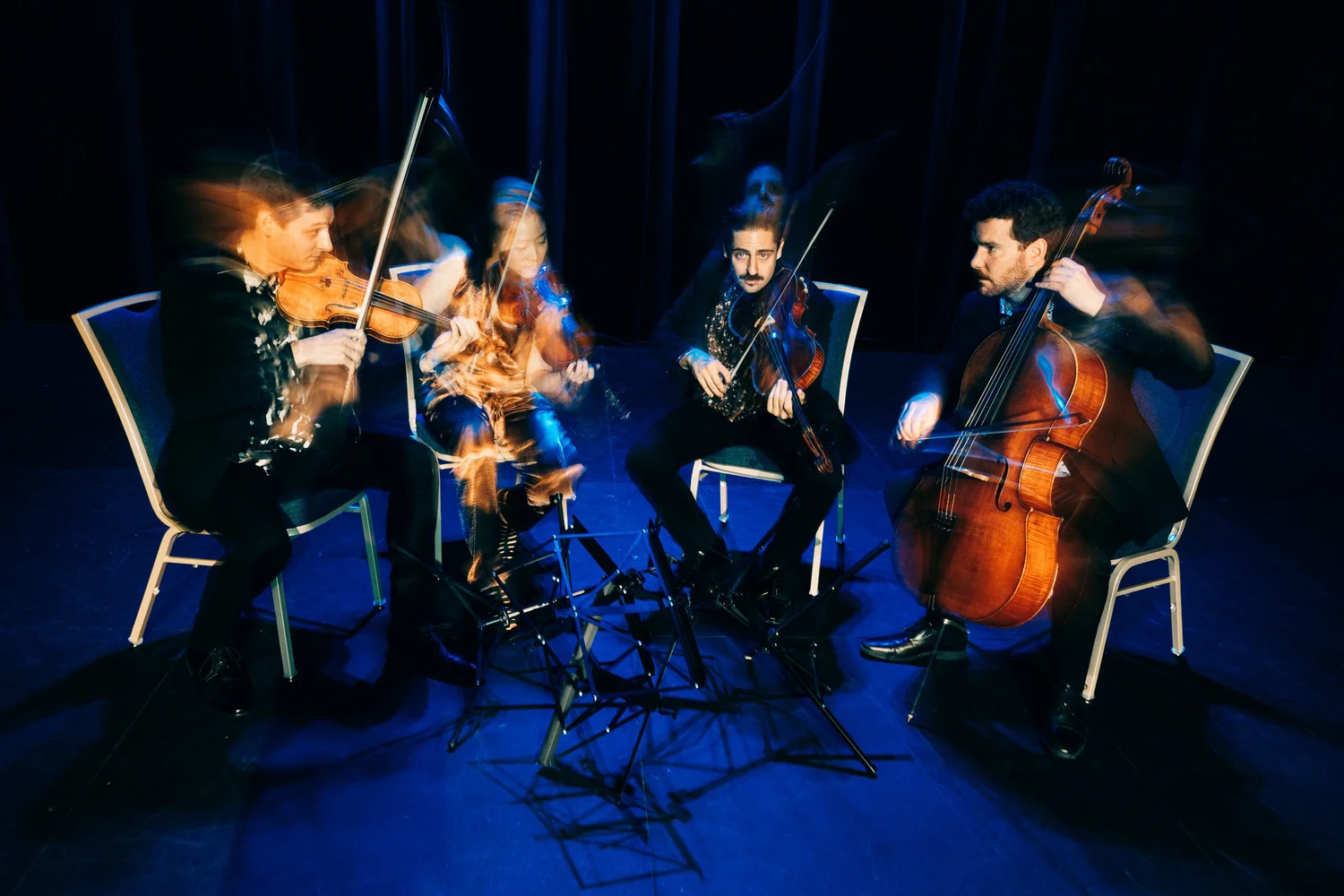
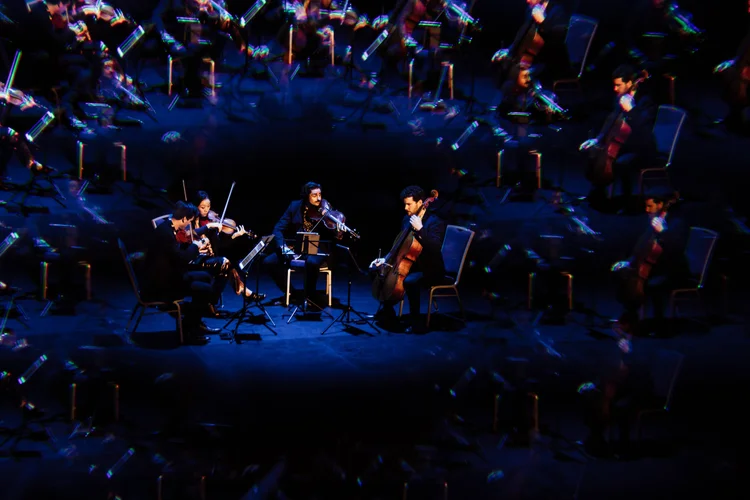
Black Mountain College Museum + Arts Center presents the Tesla Quartet, performing compositions by Hugo Kauder.
BMCM+AC is excited to welcome back The Tesla Quartet! This special performance, presented in conjunction with our Points in Space exhibition, will bring to life the music of Hugo Kauder, who served as composer-in-residence at Black Mountain College during the summer of 1945. The program will feature Kauder’s Seventh String Quartet, the same work first performed at BMC in 1945, offering audiences a rare chance to experience this historic piece in a contemporary setting.
PROGRAM
String Quartet No. 7
Adagio
Allegretto moderato
Andante
Più mosso (Allegro moderato)
Cosimo Carovani (b. 1991)
Four Little Landscapes
I. first landscape: Mist auf die Ebene
II. second landscape: vuono (fiordo)
III. third landscape: Zài gu miào li (into the ancient temple)
IV. fourth landscape: ruins
Plan & Elevation
I. The Ellipse
II. The Cutting Garden
III. The Herbaceous Border
IV. The Orangery
V. The Beech Tree
Maurice Ravel (1875-1937)
Menuet sur le nom d’Haydn”
Pavane pour une infante défunte
(Arranged by Ross Snyder for String Quartet)
The Tesla Quartet takes its name from the famed inventor Nikola Tesla, a visionary scientist and engineer celebrated for his originality, innovation, and unconventional spirit. Much like their namesake, the quartet is known for its individuality, creative energy, and forward-thinking approach. Drawing inspiration from Tesla’s relentless pursuit of new ideas, the ensemble brings a distinctive voice to the chamber music world, combining technical mastery with fresh interpretations that captivate audiences.
From the outset, the quartet plays as a single instrument. Their sound is balanced across registers, their timbres and articulations matched.
The Classic Review
Now in its 18th season, the Tesla Quartet is known the world over for their “superb capacity to find the inner heart of everything they play, regardless of era, style, or technical demand” (The International Review of Music). The quartet performs regularly across North America and Europe, with recent highlights including their debut at New York’s Lincoln Center, a return to London’s Wigmore Hall, and performances at Stanford University’s Bing Concert Hall as winners of the prestigious John Lad Prize. Other recent international engagements include tours of Brazil, China, and South Korea. Notable festival appearances include the Banff Centre International String Quartet Festival; the Joseph Haydn String Quartet Festival at the Esterházy Palace in Fertőd, Hungary; the Mecklenburg-Vorpommern Festival in Germany; and the Festival Sesc de Música de Câmara in São Paulo, Brazil. Having served as the Marjorie Young Bell String Quartet-in-Residence at Mount Allison University in New Brunswick, Canada from 2016-2017, the Tesla Quartet also recently completed a four-year community residency in Hickory, North Carolina that included performances and workshops at local colleges, universities, and in the public school system, as well as a dedicated chamber music series.
In 2018, the Tesla Quartet released its debut album of Haydn, Ravel, and Stravinsky quartets on the Orchid Classics label to critical acclaim. BBC Music Magazine awarded the disc a double 5-star rating and featured it as the “Chamber Choice” for the month of December and Gramophone praised the quartet for its “tautness of focus and refinement of detail.” They released their second disc on the Orchid Classics label in October 2019, Joy & Desolation, a collaboration with clarinetist Alexander Fiterstein featuring quintets by Mozart, Finzi, John Corigliano and Carolina Heredia.
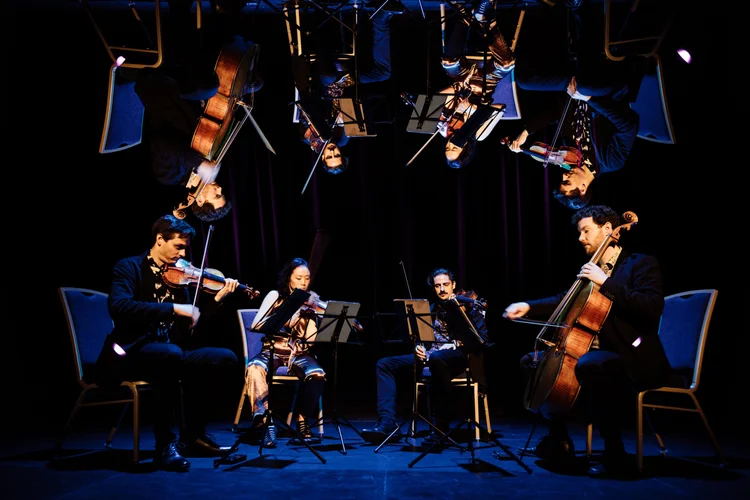
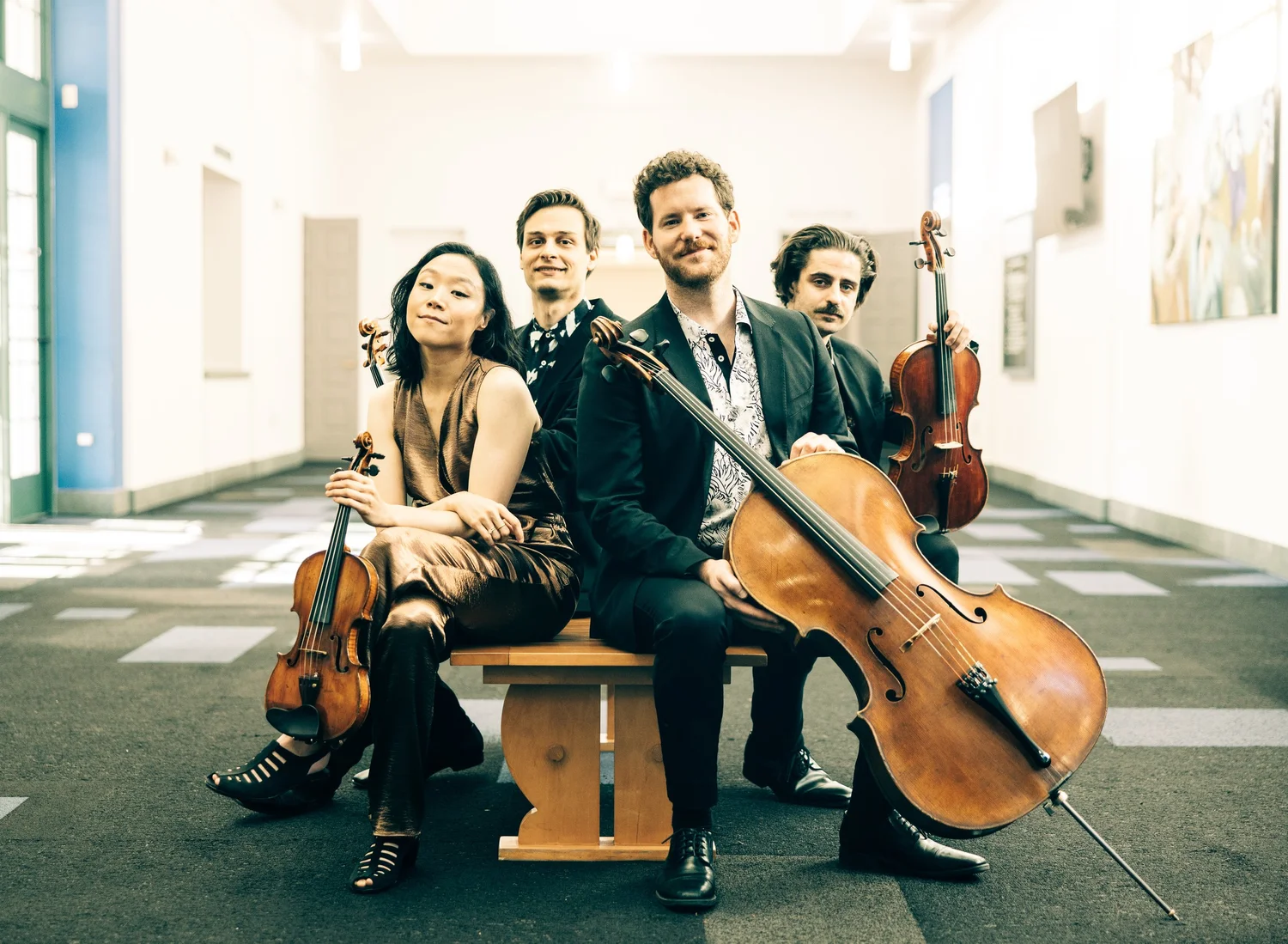
The Tesla Quartet is Ross Snyder (violin 1), Keiko Tokunaga (violin 2), Edwin Kaplan (viola), and Austin Fisher (cello).
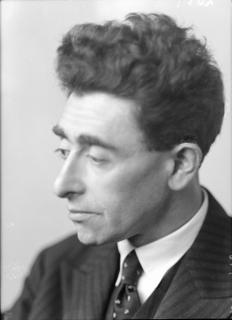
Hugo Kauder devoted his life to composing, teaching, playing, and writing about music. A successful early career in Vienna abruptly ended with the annexation of Austria into Nazi Germany. Kauder left Austria for Holland in 1938, thanks to a contract with Dutch publisher NV Mees Uitgeverij to produce settings of poems by Albert Verway. After a stop in England, Kauder settled in New York City in 1940. During Kauder’s short stay in Holland (1938-39), he formed a lasting friendship with the musicologist Edward Lowinsky, who also came to the United States and became a professor of music at Black Mountain College (1942-47). One of the era’s most prolific chamber music composers, Kauder wrote over 200 instrumental works, including 10 concertos and concert pieces (2 each for oboe, piano and violin, 1 each for cello, horn and viola, and a double concerto for violin and viola), 5 symphonies, 19 string quartets, 11 piano trios, 2 piano quartets, and variations for piano quintet. He also composed over 100 vocal works, including choral music for various combinations, an opera (Merlin), and a large number of art songs with piano (or other instruments). At a time when many believed that Western tonality had run its course, Kauder developed a style that, rather than denying, expanded the concept of traditional tonality.