
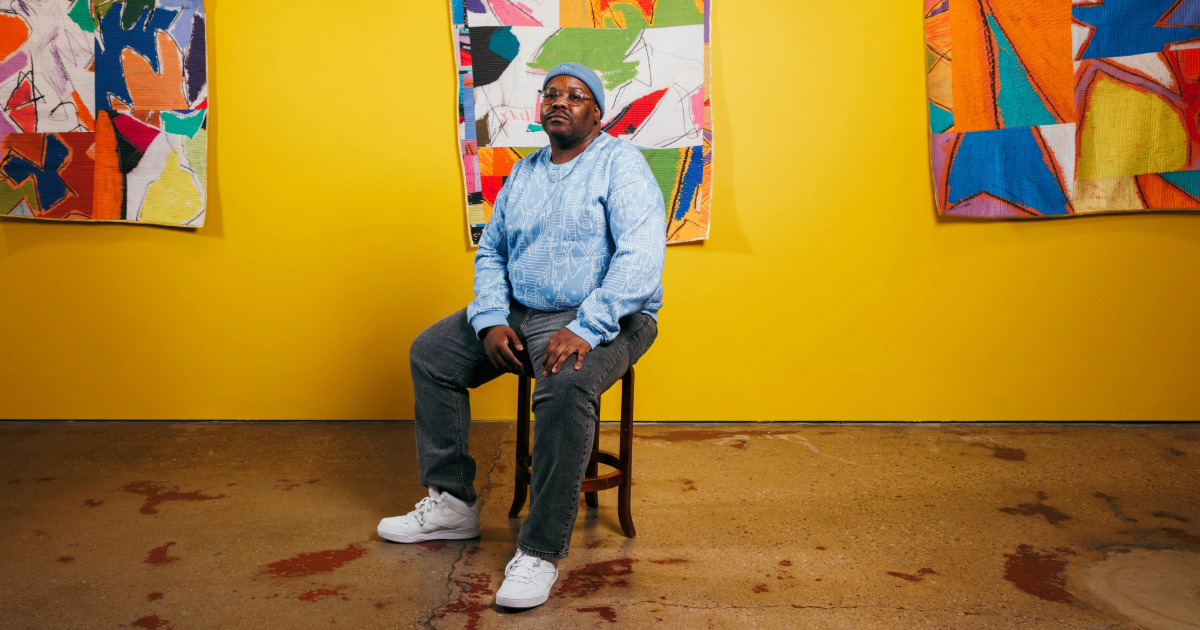
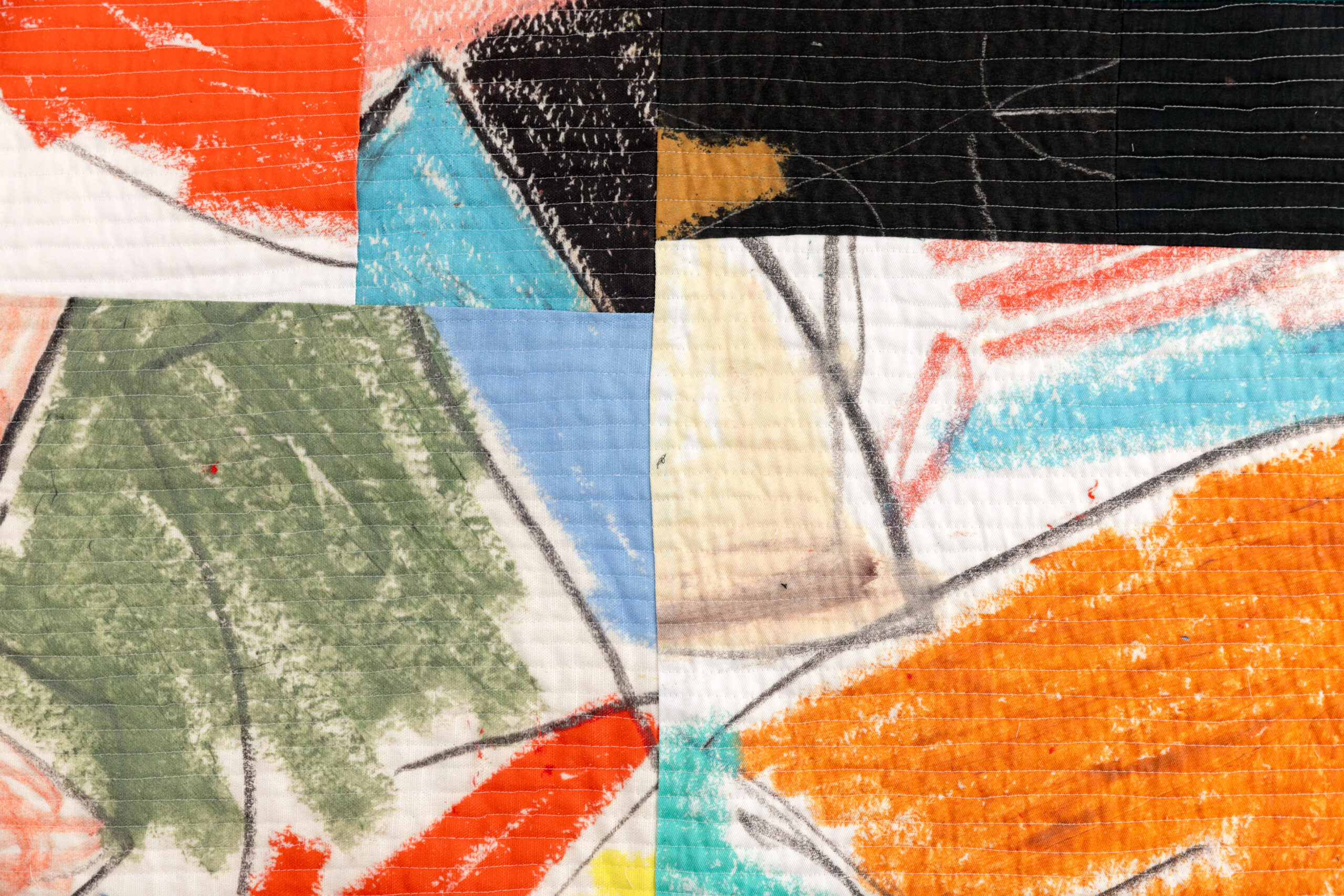
Join us for a virtual PERSPECTIVES event with Julian Jamaal Jones, a multidisciplinary artist who memorializes Black culture through fresh perspectives and a commitment to creative freedom within traditional frameworks. Drawing from the historical language of African American quilting, Jones employs abstraction and vibrant color to both honor tradition and reframe it, bypassing preconceptions and opening conversations around his lived Black experience.
In this conversation series, BMCM+AC explores perspectives from artists, scholars, curators, and leaders who engage with the living legacy of BMC. PERSPECTIVES conversations stream for free on our YouTube and Vimeo channels. This event is presented in conjunction with Black Mountain COLL(A)GE (May 29 – September 5, 2026), an exhibition exploring medium, method, and memory.
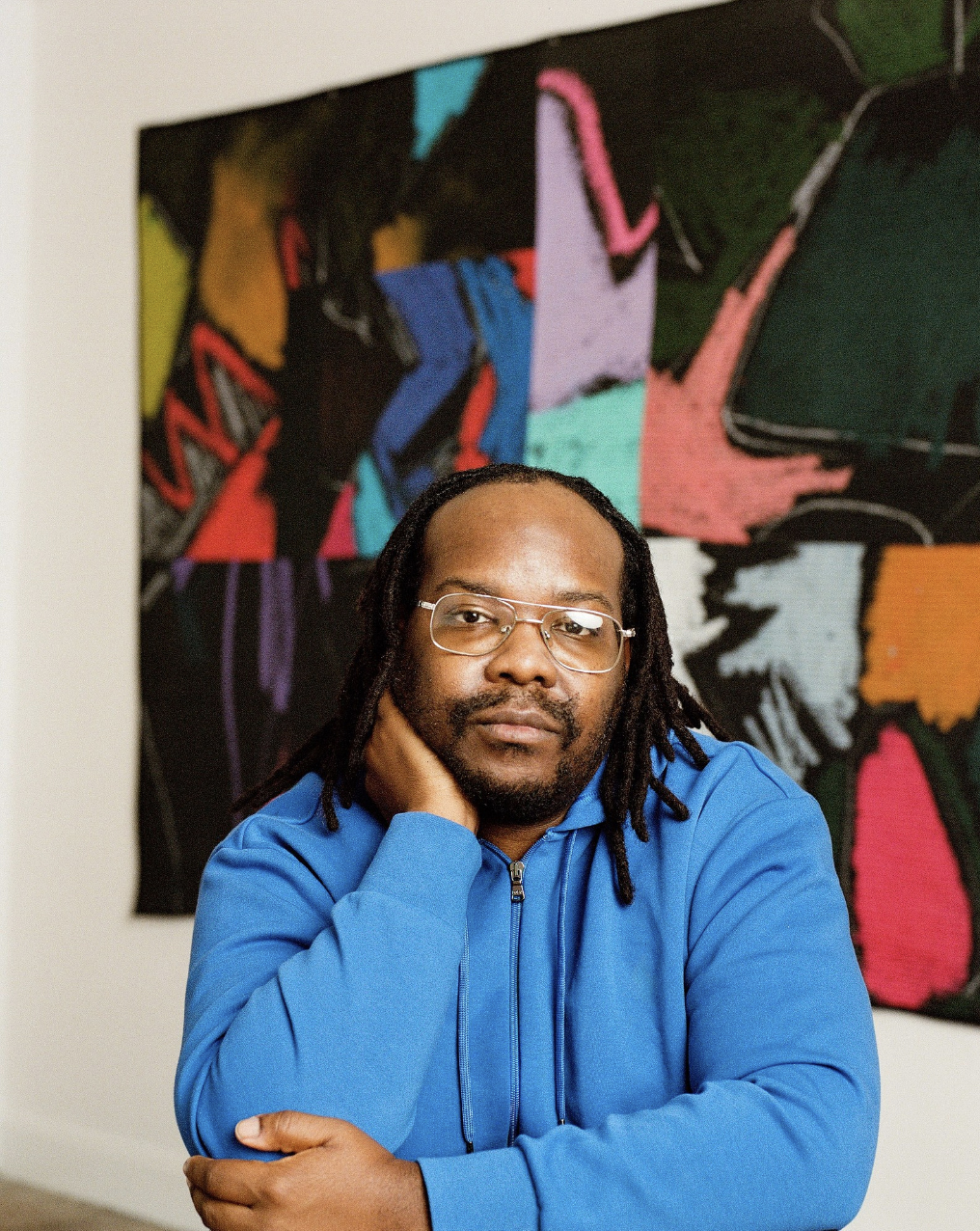
About the Artist:
Julian Jamaal Jones [ b. 1992, Indianapolis, IN ] earned his BFA in Photography from the Herron School of Art + Design and his MFA in Photography from the Cranbrook Academy of Art. He has exhibited nationally and internationally at Blue Spiral 1 Gallery in Asheville, NC; Purdue University in West Lafayette, IN; PLAYGROUND Detroit in Detroit, MI; Soft Times Gallery in San Francisco, CA; Chilli Art Projects in London, UK; Tube Factory Artspace in Indianapolis, IN; Wabash College in Crawfordsville, IN; Jac Forbes Contemporary in Los Angeles, CA; Pacific Northwest Quilt & Fiber Arts Museum in La Conner, Washington, the Richmond Art Museum in Richmond, IN; the Wisconsin Museum of Quilts & Fiber Arts in Cedarburg, WI; COMPANION Projects in Indianapolis, IN; Welancora Gallery in Brooklyn, NY; Ohio State University in Columbus, OH; the Black Mountain Museum and Fine Arts Center in Asheville, NC; and the Cranbrook Art Museum in Bloomfield Hills, MI. His artworks are held in the permanent textile collections of Cranbrook Art Museum in Bloomfield Hills, MI; the Richmond Art Museum in Richmond, IN; Wabash College in Crawfordsville, IN; and Purdue University in West Lafayette, IN.
Notable residencies include the Restoring Hope, Restoring Trust Artist-In-Residence at Wabash College in 2025, the Black Mountain College Museum + Arts Center BMC Active Archive Artist Residency, PATTERN’s S.P.A.C.E Residency in 2024, and the Dear Artists With Anxiety (DAWA) Residency in 2023. He is the recipient of the PLAYGROUND Detroit Gallery 21/22 Emerging Artist Fellowship.
“My work begins with inheritance: the hand, the stitch, the song, the memory, and the histories carried through cloth. I come from a lineage of making shaped by my great-grandmother, Grandma Elsie, a family quilter who constructed quilts and garments for her eight children with elegance, resourcefulness, and care. Through her, quilting was not only introduced to me as an object of beauty, but as a practice of protection, devotion, storytelling, and survival.
Although I never fully knew her in the way I wish I could have, I have always felt connected to Grandma Elsie. My grandmother once told me that we had a lot in common. We were both born on Christmas Day, and we both shared an interest in cooking, pastries, and making things with our hands. In many ways, I feel that she has become a guardian angel in my life and practice. Her presence continues to guide me, reminding me that creativity can be inherited, spiritual, and deeply rooted in family memory.
Raised on the northside of Indianapolis in a predominantly white environment, I often experienced isolation, anxiety, and the pressure of being seen before being understood. At the same time, my foundation was shaped by the African Methodist Episcopal Zion Church, where I witnessed the power of Black community, praise, rhythm, testimony, and spiritual assembly. These early experiences continue to inform the emotional and visual language of my work.
My practice moves between quilting, abstraction, photography, drawing, music, and memory. I approach cloth as a site of translation, using color, gesture, pattern, and stitched mark-making to process feelings that are often difficult to explain directly. Drawing remains central to my process. My sketches are intuitive, colorful, fragmented, and emotionally charged. They become the foundation for textile works that function as abstract paintings, spiritual records, and coded forms of communication.
Black popular culture, especially hip-hop, R&B, gospel, and the visual language of music videos, also shapes my understanding of composition, attitude, rhythm, and self-definition. Growing up, programs like 106 & Park offered me images of Black expression that felt expansive, stylish, rebellious, and free. That sense of visibility continues to influence how I think about color, movement, confidence, and performance within my work.
Through quilting, I build spaces where memory and emotion can gather. My work does not seek to explain everything. Instead, it holds what cannot always be spoken: loneliness, joy, grief, faith, anxiety, celebration, and the desire to be fully seen. Each piece becomes a visual altar, a place where personal history, Black cultural memory, ancestral guidance, and abstraction come together in cloth.”